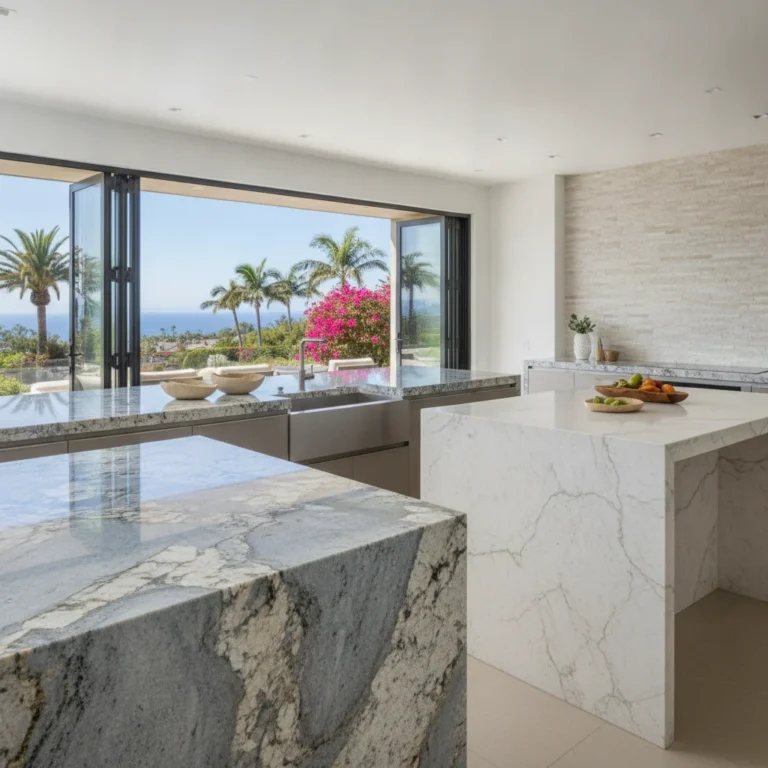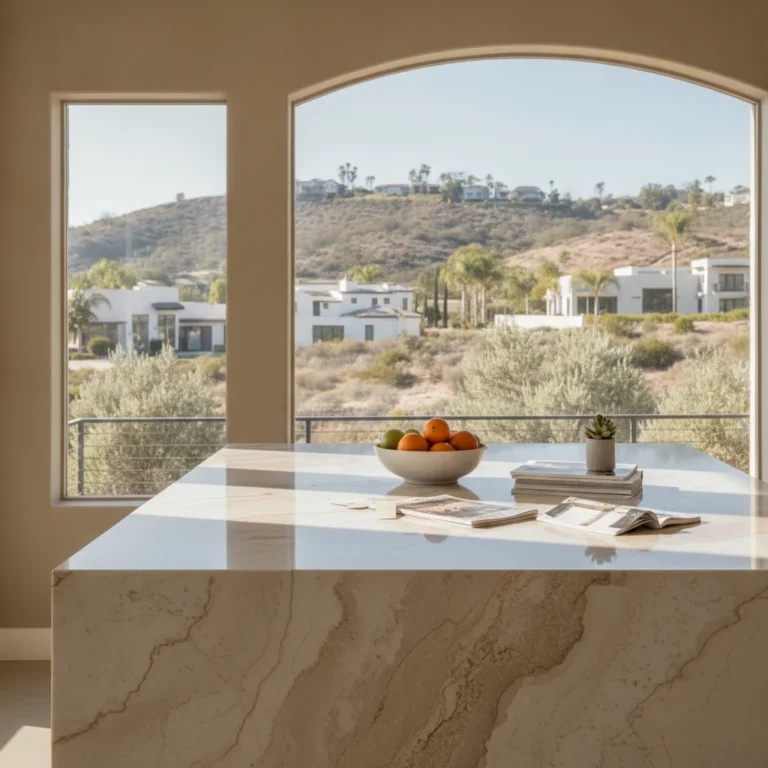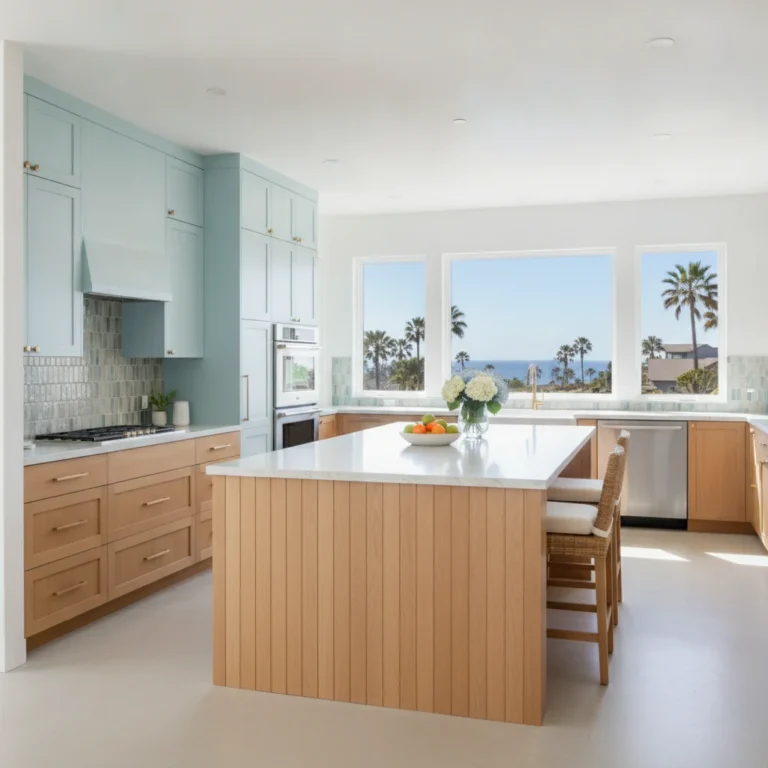

San Diego homeowners love bright, coastal kitchens that balance everyday durability with easy, breezy style. If you are planning a countertop upgrade, two premium natural stones rise to the top of almost every shortlist: granite and quartzite. Both are beautiful, hard-wearing, heat-tolerant, and timeless—yet they are not the same. This comprehensive guide compares each material across performance, maintenance, design, and cost so you can choose confidently for a San Diego home—whether you live in La Jolla, Del Mar, Carlsbad, or Chula Vista.

Quick Take: How Granite and Quartzite Differ
- Granite is an igneous rock formed from cooled magma. It typically has speckled, granular patterns (quartz + feldspar + mica), comes in many colors, and is widely available. It is very hard, heat tolerant, and fairly stain resistant with proper sealing.
- Quartzite is a metamorphic rock that began as sandstone and transformed under heat and pressure. It usually features linear or wispy veining (often confused with marble). True quartzite is harder than most granites, highly heat tolerant, and dense, but it still benefits from sealing to resist stains.
Bottom line: Granite offers broad color variety, proven everyday toughness, and friendly pricing. Quartzite delivers elevated hardness and marble-like veining with better practicality than marble—great for San Diego’s sun-filled, open-concept kitchens where bright light reveals surface detail.
Why the San Diego Context Matters
- Coastal air & sunlight: Salt air, ocean humidity, and intense UV can speed finish wear and reveal etching on softer stones. Granite and quartzite both handle UV and heat well; quartzite’s extra hardness can help resist micro-abrasions near open sliders and patio doors.
- Indoor–outdoor lifestyle: Many San Diego homes blur the line between kitchen and backyard grilling. Surfaces near pass-through windows or barbecue prep stations see more heat and splashes. Both stones are suitable; routine sealing preserves stain resistance.
- Design preferences: Local style leans light and calm—white cabinets, rift-sawn oak, limestone floors, and matte brass or black fixtures. Quartzite’s marble-like veining suits this look, while granite’s broader palette helps you coordinate with warmer cabinets and bold backsplashes.

Performance Deep Dive
1) Hardness & Scratch Resistance
- Granite typically measures ~6–7 on Mohs hardness, meaning it resists everyday wear from flatware, sliding plates, and small grit.
- Quartzite commonly measures ~7, often harder than granite. It better resists micro-scratches from sand grains that come home from the beach.
San Diego implication: If your kitchen is a sand-in/sand-out zone, quartzite’s extra hardness provides a margin of safety. Granite still performs very well for most families—just use cutting boards to protect knives and finish.
2) Heat Tolerance
Both stones handle high heat effectively. Briefly setting down a hot pan typically won’t harm either surface. However, use trivets: thermal shock is possible with any stone, and pads protect the sealer and reduce risk near outdoor pass-throughs.
3) Stain Resistance & Sealing
- Granite: Many slabs are moderately porous. Annual sealing (sometimes every 1–2 years depending on usage) keeps oils, wine, and tomato sauce from penetrating.
- Quartzite: True quartzite is denser, often requires less frequent sealing, but still benefits from it—especially the quieter, lighter varieties used in coastal palettes.
San Diego implication: Outdoor entertaining equals more citrus, salsa, wine, and sunscreen—things that can stain or dull finishes. A quality penetrating sealer and quick cleanup are your best friends for both stones.
4) Etching & Acids
Unlike marble, granite and quartzite do not easily etch from mild acids (lemon, vinegar). Very strong or prolonged exposure can dull a finish, but it’s rare in normal use. That makes both suitable for households that love ceviche nights.
5) Chips & Repairs
Edges can chip if struck sharply by cookware.
- Granite repairs are familiar to most fabricators and usually blend well.
- Quartzite chips can be slightly more challenging due to hardness, but a skilled pro can repair discreetly.
Maintenance & Care
- Seal on schedule: Test annually—drop water on the surface; if it darkens quickly, it’s time to seal.
- Clean daily: Use pH-neutral stone cleaner or mild dish soap and warm water; avoid bleach and harsh degreasers.
- Wipe spills promptly: Wine, coffee, citrus, and oils can penetrate if left overnight.
- Protect edges: Use cutting boards, silicone mats, and trivets.
- Finish refresh: A light professional polish can revive sheen after several years.
Pro tip for coastal homes: Keep a microfiber towel near your slider or pass-through window. Wipe down after salty breezes or grill sessions to slow film buildup.
Aesthetics & Design Direction
Granite’s Look
- Visual: Speckled minerals, crystal “sparkle,” and movement from mica.
- Colors: Broad range—white, beige, tan, gold, charcoal, black, blue, green.
- Pairings: Works well with stained wood, bold backsplashes, and mixed metals. Granite’s busier patterns can hide crumbs and smudges, great for families.
Quartzite’s Look
- Visual: Elegant, marble-like veining with a slightly crystalline depth.
- Colors: White, gray, cream, soft green, taupe; dramatic rifted veining is common.
- Pairings: Ideal with white or rift-oak cabinets, soft plaster hoods, and light oak floors. Gives that calm, coastal feel without marble’s fragility.

Finish Options: Polished, Honed, and Leathered
- Polished (high sheen): Reflects light beautifully—great for bright San Diego daylight. It shows fingerprints more readily on dark stones.
- Honed (matte): Softer look, hides smudges, slightly more porous—seal carefully.
- Leathered (textured): Subtle sheen with tactile texture; hides fingerprints and crumbs.
Tip: If you love open windows and morning sun, a polished quartzite or leathered granite keeps the room lively without showing every fingerprint.
Edges, Thickness, and Layout
- Standard thickness: 3 cm (1 ¼”) is typical in Southern California.
- Edges: Eased, bevel, half bullnose are most popular; mitered edges create modern thick-slab illusions on islands.
- Seams: Discuss seam placement with your fabricator during templating—especially for quartzite with long, continuous veining.

Cost & Value in the San Diego Market
Prices vary by slab rarity, fabrication complexity (miters, waterfall edges, cutouts), and installer reputation. As a general orientation:
- Granite: Typically more budget-friendly with wide availability. You’ll find many beautiful choices that keep you under premium budgets while still offering natural stone prestige.
- Quartzite: Often priced higher than common granites due to quarrying difficulty, transport, and demand for marble-like looks.
Value lens: If you want sophisticated veining and high hardness for a bright coastal kitchen, quartzite justifies its premium. If your goal is to maximize design impact per dollar, granite will give you abundant color options and proven durability.
Sustainability & Sourcing
Both stones are quarried natural materials. Environmental impact depends on quarry practices and transport distances. Look for:
- Transparent suppliers with documented quarry standards.
- Local fabrication to reduce transport emissions.
- Durability-first choices—a countertop that lasts decades is inherently sustainable.
Outdoor Kitchens & Pass-Throughs
Granite and quartzite both excel in outdoor or semi-outdoor setups due to UV and heat tolerance. If your La Jolla or Encinitas kitchen opens to a grill station:
- Choose darker granites or mid-tone quartzites to minimize sun glare.
- Opt for leathered finishes outdoors for grip and to hide dust.
- Seal as recommended, especially near salt air.
Common Myths—Debunked
- “Quartzite is the same as engineered quartz.”
False. Quartzite is natural stone; engineered quartz is a factory product with resins. - “Granite stains easily.”
With a quality sealer and basic care, granite resists staining very well. - “Quartzite never needs sealing.”
Many quartzites are dense, but a penetrating sealer is still smart insurance, especially in busy family kitchens. - “All quartzite looks like marble.”
Many do, but quartzite can range from subtle to dramatic; verify the stone is true quartzite (not a soft “calcitic quartzite” sometimes mislabeled).
How to Shop Slabs in San Diego
- Visit multiple stone yards to see real slabs in natural light; bring cabinet and flooring samples.
- Request water/acid tests: Ask the yard to wet a spot and try lemon juice on a corner to observe absorption and etching tendencies (wipe off promptly).
- Ask about origin and grade: Some stones vary widely by batch—pictures online rarely tell the whole story.
- Tag your slab: Once you fall in love, place a hold while your fabricator confirms yields and seam layout.
- Confirm finish: Polished vs. honed vs. leathered can completely change the look and maintenance profile.

Installation: What to Expect
- Templating: The fabricator measures your space precisely (often with laser templating).
- Layout: You’ll review seam placement and veining flow—especially important for quartzite.
- Fabrication: Edges are shaped, sink cutouts created, and seams prepped.
- Install day: Clear cabinets; expect some dust and noise.
- Final sealing: Many fabricators seal upon install; ask about first-year care.
- Walkthrough: Review seams, finish, and caulking; learn cleaning routine.

Granite vs. Quartzite: Decision Matrix
Choose Granite if you want:
- The widest range of colors and patterns, from subtle to dramatic.
- Strong performance at a friendlier price point.
- A surface that hides crumbs and smudges in busy households.
Choose Quartzite if you want:
- A marble-like look with greater hardness and better practicality than marble.
- A bright, coastal aesthetic where linear veining shines in San Diego light.
- Extra assurance against micro-scratches from sand and grit.
Either Stone Is a Win if you:
- Seal properly, wipe spills promptly, and use trivets and cutting boards.
- Choose reputable local fabricators who template and seam thoughtfully.
- Select a finish that fits your lifestyle (polished indoors; leathered in high-glare or outdoor zones).
Real-World Scenarios (San Diego Use Cases)
- Family of five in Carmel Valley: Kids + sports + beach days. Granite with a leathered finish hides smudges and handles daily wear; budget stays happy.
- Entertainer in La Jolla: Open plan with lots of light and a minimalist palette. Quartzite in soft gray veining delivers elegance without marble fuss.
- Outdoor pizza nights in Point Loma: Pass-through window and grill island. Granite or quartzite both work—choose leathered or honed to reduce glare and ensure better grip with salty breezes.
Care Kit Checklist (Keep It Handy)
- pH-neutral stone cleaner
- Microfiber cloths
- Soft scrub pad (non-abrasive)
- Trivets and cutting boards
- Resealer (per fabricator’s schedule)
- Stain remover poultice (for the occasional mishap)
The Final Word
There is no single “best” stone—there is a best fit for your home. Granite and quartzite both offer long-term durability and beauty that suit San Diego’s sunlit, coastal lifestyle. If your design vision is soft, serene, and vein-driven, quartzite will make your kitchen sing. If you want cost-effective strength with tons of color choice and easy living, granite will be your everyday hero.
Ready to choose? Visit local slab yards with this guide in hand, tag your favorite stones, and work with a reputable fabricator to dial in finish, seams, and edges. With a little planning and the right sealer, either stone will reward you for years—through brunches, homework nights, and the salty breeze drifting in from the Pacific.

Action Plan for San Diego Homeowners
- Define your priorities: Veining vs. speckle, budget, maintenance tolerance, and lifestyle.
- See slabs in person: Natural light reveals the true character of granite and quartzite.
- Ask for a sample: Take it home; test with water and lemon juice (wipe right away).
- Get two quotes: Include edge profile, finish, seam plan, and sealing.
- Schedule install: Coordinate with backsplash, plumbing, and appliance timelines.
- Enjoy your kitchen: With a care kit on hand, both stones will handle the daily rhythm of coastal living.
Summary Snapshot
- Granite: Wide color range; strong, heat-tolerant; budget-friendly; seal annually; great for active families.
- Quartzite: Marble-like looks; often harder than granite; heat-tolerant; seal as advised; premium feel for bright, coastal designs.
- San Diego fit: Both are excellent. Let style, maintenance preference, and budget guide the final call.
Final Recommendation
If you crave serene veining and a refined coastal look, choose quartzite and commit to simple, periodic sealing. If you want maximum value, pattern variety, and forgiving day-to-day use, choose granite—especially in a leathered or polished finish tailored to your home’s light.