Shifting Architectural Demands and Porcelain Trends in Alpine for 2026
Alpine homeowners face distinct microclimate realities that rapidly degrade ordinary countertop surfaces. The combination of intense foothill sunlight, sharp day-to-night temperature drops, and local fire safety requirements pushes property owners toward denser, non-porous surfaces. Highlighting modern porcelain trends in Alpine for 2026, design-forward homeowners now select engineered sintered surfaces that endure severe conditions while elevating interior aesthetics.
- Ultra-compact sintering that repels intense high-desert UV radiation
- Class A fire resistance ratings for high wildfire threat zones
- Near-zero moisture retention that resists cold night contractions
- Continuous slab dimensions that eliminate grout lines across vast layouts
These core attributes solve the persistent maintenance problems associated with porous granite and resin-heavy quartz. When high thermal variance causes other materials to expand and crack, porcelain maintains complete dimensional stability. Builders throughout the region now integrate these surfaces into primary living spaces, outdoor dining verandas, and heavy-use culinary areas to guarantee multi-decade longevity.
Massive Continuous Slabs and Visual Continuity
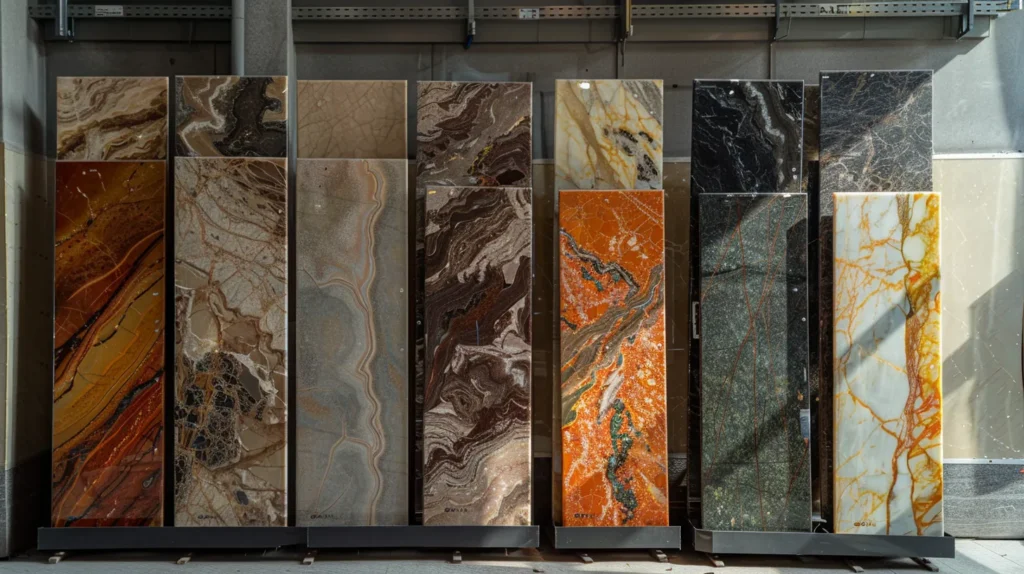
Alpine architectural styles increasingly embrace open layouts that merge indoor living rooms with scenic mountain views. Designers utilize extra-large porcelain slabs measuring 126 inches by 63 inches to cover expansive kitchen islands without visible seams. These continuous surfaces create an uninterrupted visual plane that expands the perceived volume of the room. Homeowners abandon fragmented tile layouts in favor of unified surfaces that showcase uninterrupted veining patterns across entire horizontal spans.
Seamless Indoor Vertical Surfacing
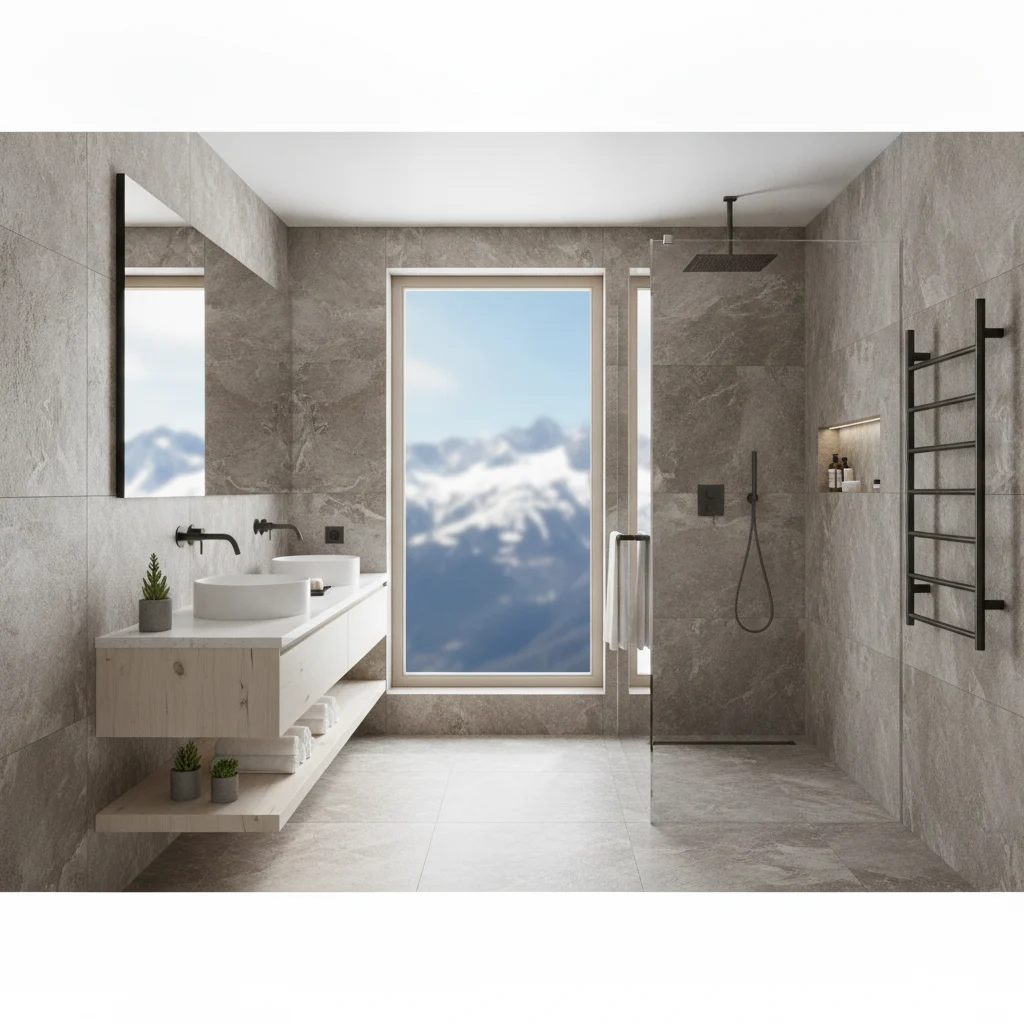
Fabricators extend these identical floor-to-ceiling porcelain panels directly onto focal walls, fireplace surrounds, and range backsplashes. Bookmatched porcelain slabs create mirror-image veining that turns functional kitchen work zones into striking gallery features. Because porcelain weighs significantly less than three-centimeter natural quartzite, installers mount twelve-millimeter or six-millimeter panels vertically without demanding complex structural wall reinforcements.
This application simplifies ongoing household care. Grout lines accumulate grease, mold, and airborne dust. By eliminating grout joints across vertical and horizontal planes, you create an impermeable barrier that cleans easily with warm water and neutral soap.
Climate Resistance and Thermal Performance in the San Diego Foothills
Alpine experiences extreme microclimates that differ dramatically from coastal communities. Temperatures routinely climb past ninety-five degrees in late summer, only to plunge into the low thirties during winter nights. Farther east in Borrego Springs, desert heat degrades low-grade resins. In Alpine, fluctuating mountain weather cracks rigid, brittle surfaces that cannot tolerate rapid thermal movement.
Outdoor Kitchen Resiliency
Unlike engineered quartz surfaces that discolor under direct solar exposure, porcelain uses natural mineral oxides fired at temperatures exceeding 2,200 degrees Fahrenheit. The sun cannot yellow or warp pure porcelain. You can place hot cast-iron skillets directly onto the countertop without trivets, thermal pads, or fear of scorched resin rings.
Porcelain also provides exceptional frost resistance during freezing mountain nights. Water cannot penetrate the surface to freeze, expand, and generate internal fissures. This makes porcelain the premier specification for outdoor barbecue islands, patio bars, and exterior dining tables exposed to full sun and alpine storms throughout the seasons.
Material Performance Metrics and ASTM Testing Standards
Rigorous laboratory testing validates the superior mechanical durability of porcelain over conventional surfacing materials. The Tile Council of North America establishes clear performance metrics that quantify how various materials withstand moisture, abrasion, and intense heat. Sintered porcelain consistently outranks natural stone and composite alternatives in critical durability categories, as demonstrated by standardized tests like ASTM C373 for water absorption.
| Performance Attribute | Sintered Porcelain Slab | Engineered Quartz | Natural Granite |
|---|---|---|---|
| Water Absorption (ASTM C373) | Less than 0.05% | 0.10% to 0.20% | 0.20% to 0.50% |
| Mohs Surface Hardness | 7 to 8 | 6 to 7 | 6 to 6.5 |
| UV Degradation Risk | Zero discoloration | High resin yellowing | Low to moderate |
| Direct Heat Resistance | Up to 1,200°F | Damages at 300°F | Damages at 450°F |
| Maintenance Requirement | Zero sealing needed | No sealing needed | Annual chemical sealing |
The structural density of porcelain yields an absorption rate below 0.05 percent, classifying the material as impervious under strict industry protocols. Acids, red wine, citrus oils, and outdoor bird droppings cannot penetrate the dense outer glaze. This molecular structure gives busy households complete freedom from topical sealers, harsh stripping agents, and surface restoration treatments.
Modern Texture Profiles and Earth-Tone Color Palettes
Design preferences for 2026 move decisively away from cold, high-gloss whites toward organic, tactile finishes that echo the natural foothill terrain. Alpine residents favor honed, leathered, and slate-textured porcelain slabs that diffuse bright sunlight and deliver a rich, warm tactile sensation underhand. These matte profiles blend seamlessly with natural timber cabinetry, exposed ceiling beams, and wrought iron hardware.
- Select warm travertine and limestone interpretations to soften expansive mountain light
- Pair deep charcoal porcelain with natural wood cabinetry for balanced organic modernism
- Specify honed textures to minimize reflective solar glare through oversized panoramic windows
- Incorporate seamless integrated porcelain sinks to maintain uniform horizontal planes
Modern porcelain mimics natural stone formations with stunning optical precision. Advanced high-definition digital inkjet technology deposits authentic veining, fossilized impressions, and color gradations deep into the ceramic body rather than printing an artificial layer on the surface. You enjoy the dramatic visual character of Calacatta marble, Belgian bluestone, or rustic soapstone without the porosity, etching, and scratching that plague soft metamorphic rocks.
Structural Substrate Preparation and Mitered Edge Fabrication
Proper slab handling and exact substructure engineering dictate the ultimate success of any porcelain project. Sintered slabs hold internal manufacturing tension that requires specialized fabrication machinery. Qualified technicians use continuous-rim diamond bridge saws, active water jets, and variable-speed polishing tools to produce clean cuts without chipping the finished edges.
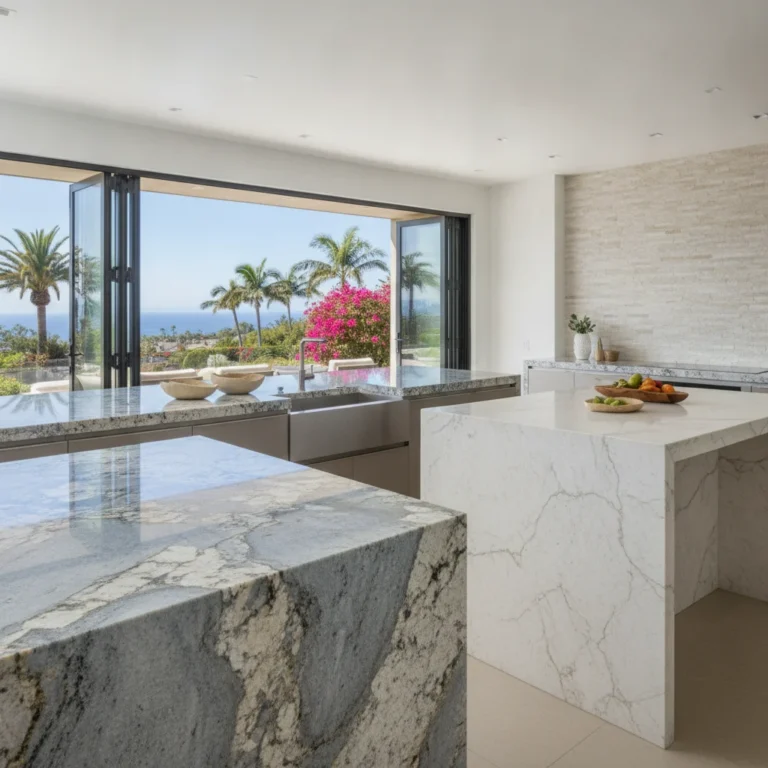
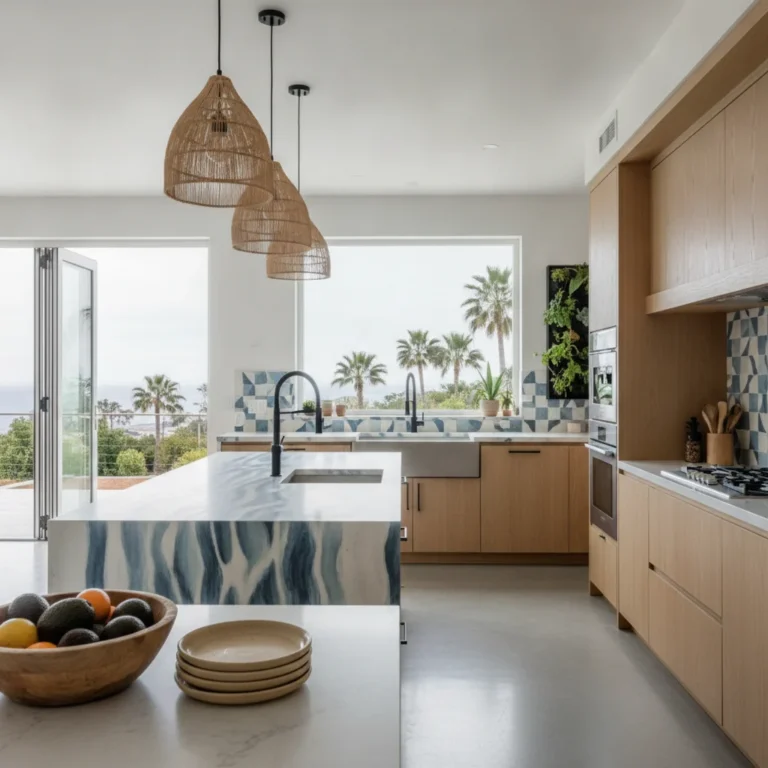
Because standard porcelain slabs arrive in twelve-millimeter thicknesses, fabricators construct mitered drop edges to establish the visual weight of a two-inch or three-inch stone slab. Expert craftsmen cut forty-five-degree angles along the slab perimeter and bond them using color-matched epoxy adhesives. This precision technique conceals the joint, creating the illusion of an opulent, monolithic block of quarried stone across your countertops and waterfall drops.
Successful installations demand flat, rigid sub-tops built from exterior-grade plywood or high-density structural backer boards. Installers verify that the underlying cabinetry exhibits zero deflection. Correct structural planning eliminates flexural stress, ensuring that your investment survives heavy kitchen impact, appliance vibration, and domestic wear for decades. Review our comprehensive guides for Kitchen Remodeling in Alpine, CA to align your cabinetry design with heavy-duty porcelain requirements.
Upgrade Your Living Space with Prefab Granite Depot
Prefab Granite Depot delivers exceptional surface fabrication and certified installation across East County. We supply the latest high-performance slabs, providing factory-direct pricing, custom edge mitering, and complete project management from initial layout through final placement. Explore our premium inventory of Porcelain Countertops to secure durable luxury for your home. Call our design specialists at 858-330-6782 to schedule your free consultation and receive your detailed installation estimate today.
Frequently Asked Questions
Can hot pans sit directly on porcelain countertops without damaging the finish?
Yes, porcelain easily tolerates direct contact with cookware straight from the stovetop or oven. Manufacturers kiln-fire porcelain at temperatures above 2,200 degrees Fahrenheit, ensuring extreme thermal resistance. The surface will not scorch, discolor, melt, or produce toxic fumes under high cooking temperatures.
Why should Alpine homeowners select porcelain instead of engineered quartz?
Porcelain withstands intense UV sunlight and thermal shifts that warp, crack, and discolor the synthetic resin binders inside quartz surfaces. Because Alpine experiences wide daily temperature swings and bright foothill sunlight, porcelain offers superior exterior and interior durability. Porcelain also resists staining, deep scratches, and chemical etching without requiring surface sealers.
Do large porcelain slabs crack during seismic movement or everyday use?
Porcelain slabs demonstrate immense structural durability once technicians install them over a level, solid substrate. Proper plywood sub-tops and specialized adhesives absorb minor structural vibrations and distribute heavy surface loads evenly. You can chop food, prepare family meals, and set heavy appliances on the counter without cracking the material.
How do installers create thick decorative edges on twelve-millimeter porcelain?
Installers create thick edge profiles by mitering the front rim at a precise forty-five-degree angle and bonding a matching vertical apron piece. High-strength, color-matched epoxy fuses the seams seamlessly to produce the appearance of a solid, thick stone slab. This specialized method produces clean modern profiles, classic double-thick profiles, or dramatic waterfall panels.
Does sintered porcelain require periodic topical sealing like granite?
Porcelain never requires chemical sealers, penetrating treatments, or specialized conditioning polishes. The ultra-compact manufacturing process reduces the water absorption rate below 0.05 percent, making the surface naturally impervious to stains and liquids. Homeowners clean the non-porous surface using simple household soap, warm water, or standard microfiber cloths.
Can fabricators integrate matching porcelain sinks directly into the countertop?
Experienced fabricators craft integrated sinks using identical porcelain slabs to create a seamless, unified design. They miter and waterproof the interior corners, creating an elegant basin that blends smoothly into the surrounding counter. This custom feature simplifies cleanup by eliminating silicone caulk lines and metal sink rims that trap dirt.