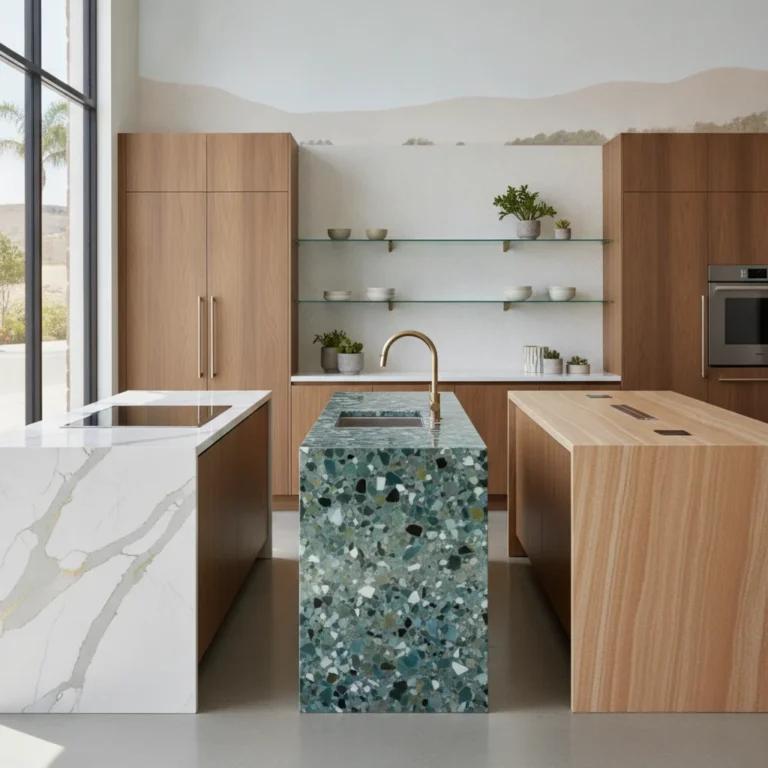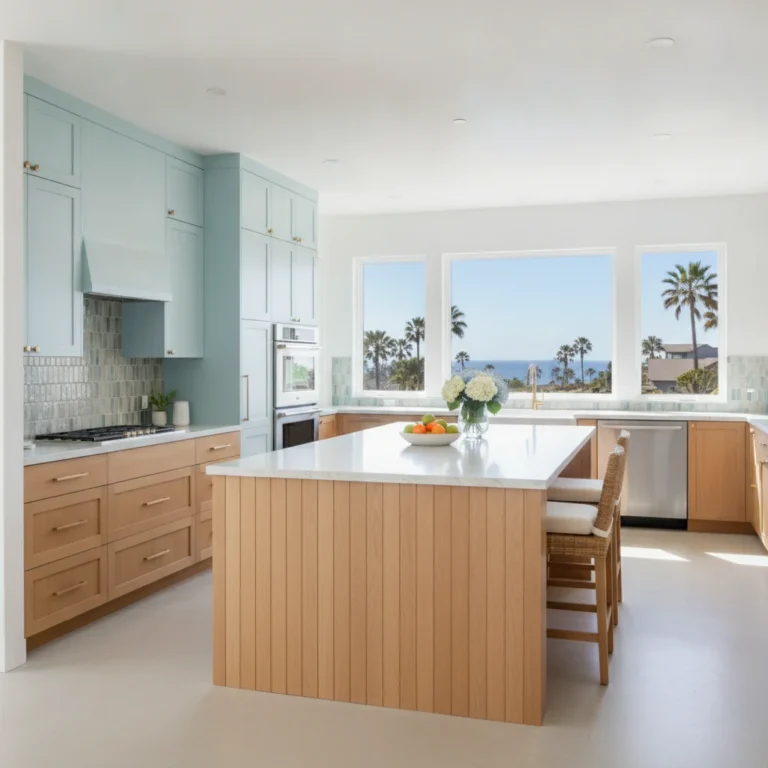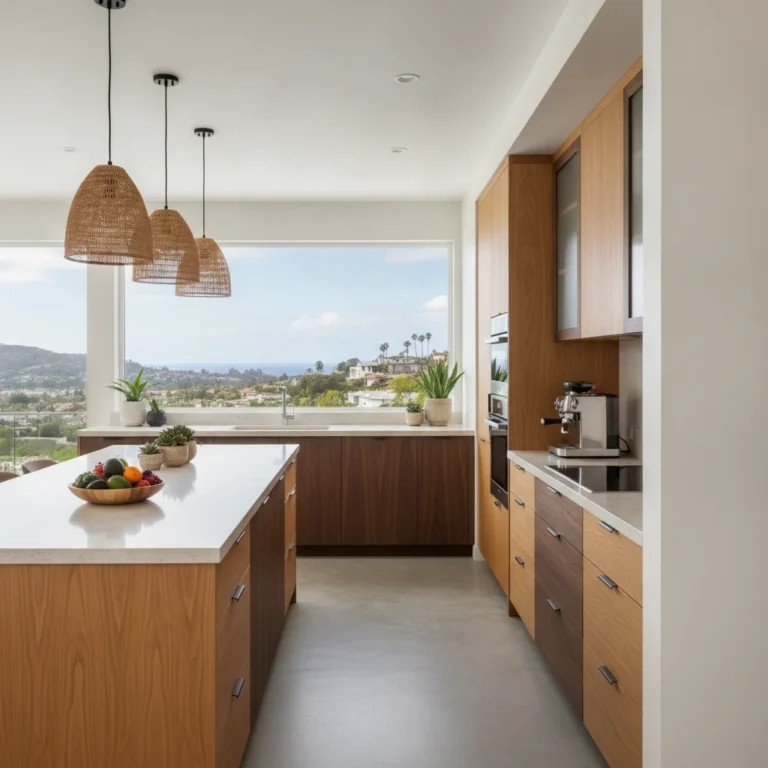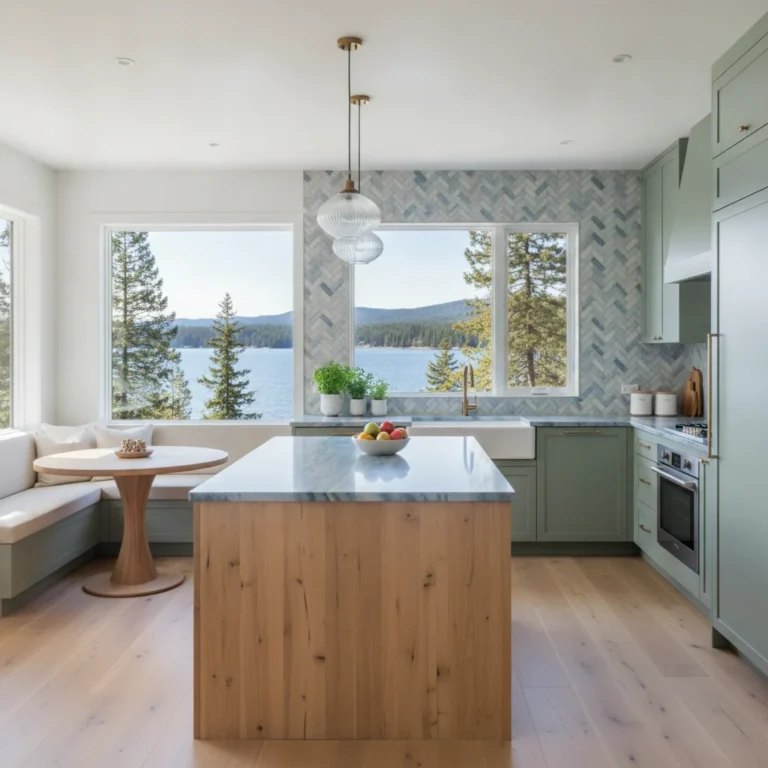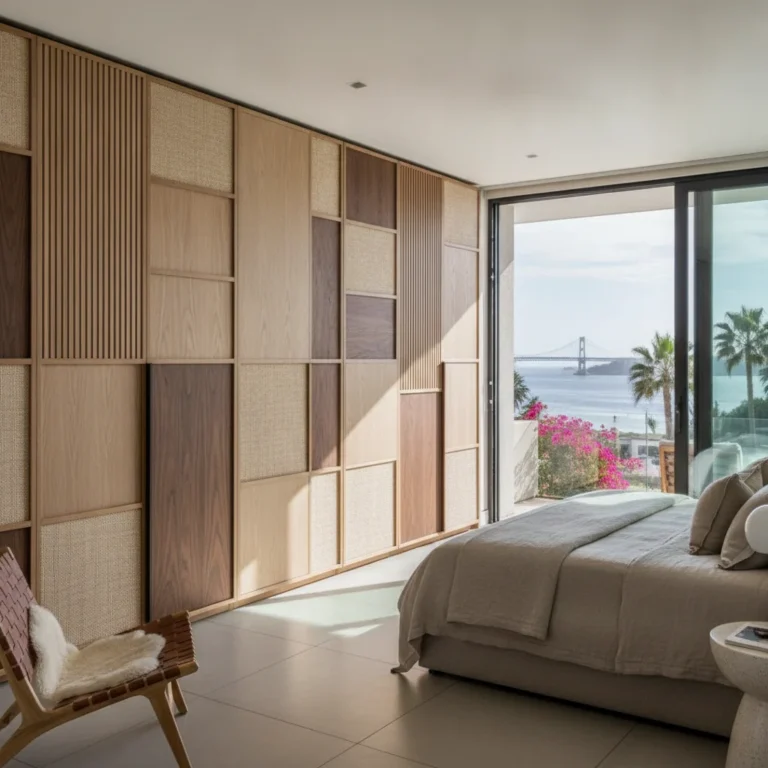
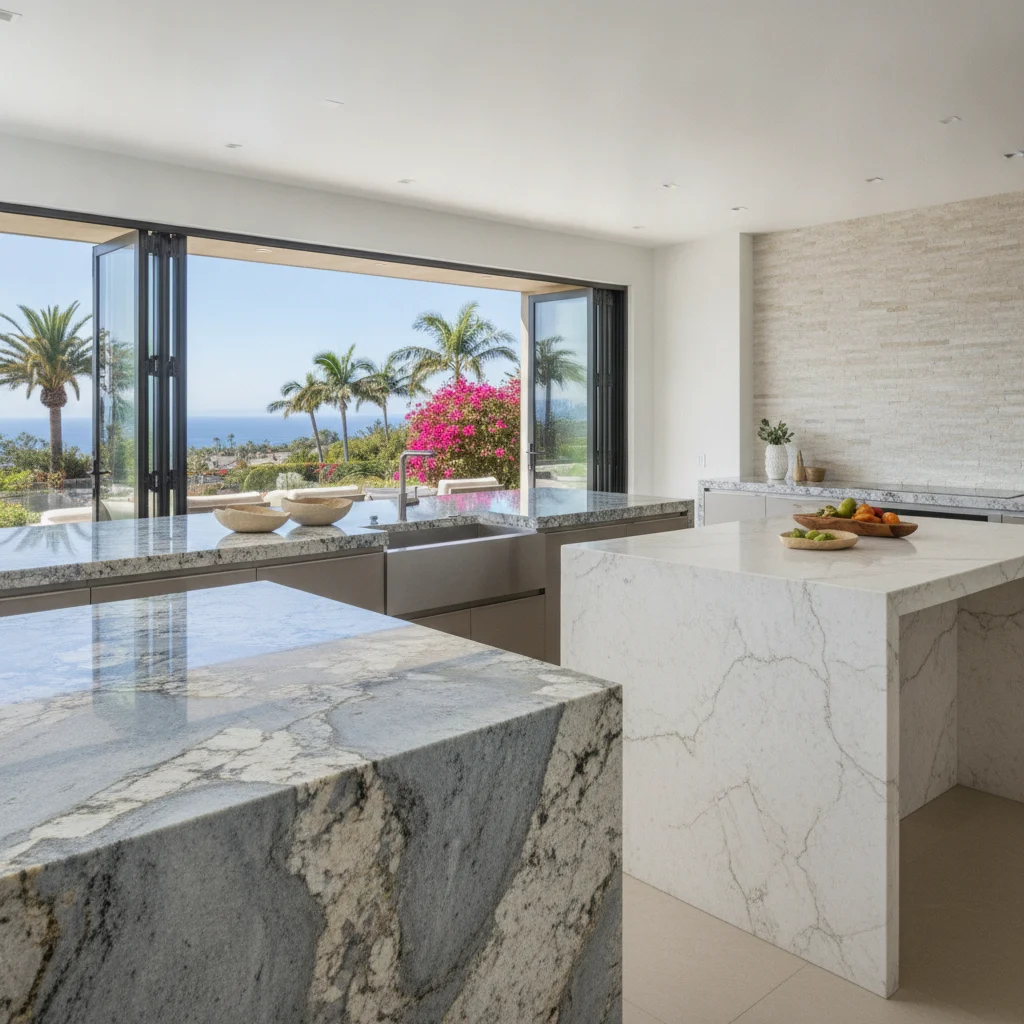
Selecting natural stone surfaces requires a clear understanding of material performance, local environmental stressors, and fabrication quality. When you evaluate natural stone fabricators in coastal North County, distinguishing a superior contractor from a subpar installer comes down to specific operational standards. Reliable fabricators utilize digital templating laser systems, possess comprehensive slab yard inventory, and employ full time installation crews rather than unvetted subcontractors. Inferior providers cut corners on substrate leveling, employ toxic solvent based adhesives indoors, and leave visible, poorly aligned seams across high visibility spans.
Evaluating Granite Fabricators and Installers in Encinitas
You must evaluate specific technical criteria before signing a fabrication contract for your residential renovation. High grade fabrication demands precise machinery, experienced stone artisans, and transparent quality control protocols at every step.
- Digital laser templating systems that measure wall irregularities to within one thirty-second of an inch
- Waterjet cutting technology that prevents micro fissures and stress fractures along slab perimeters
- Vacuum lifting equipment during transit to eliminate internal structural flex in fragile stone varieties
- Comprehensive mechanical anchoring for overhangs, cantilevers, and undermount cast iron sinks
- Explicit written warranties covering seam integrity, structural adherence, and anti-stain penetration sealing
Subpar contractors often fail to account for the unique ambient conditions of seaside communities. Marine humidity affects adhesive curing rates, while salt air accelerates the degradation of low grade epoxies. By selecting a dedicated specialist with deep regional experience, you protect your capital investment and secure durable, visually stunning results for your kitchen and bathroom surfaces across coastal San Diego County.
Top Granite Trends in Encinitas for 2026
Coastal homeowners are shifting decisively away from high gloss, speckled stone surfaces in favor of organic textures, deep earth tones, and dramatic geological movement. As interior spaces transition toward warm minimalism, natural stone surfaces serve as the central visual anchor of the home.
Honed and Leathered Matte Textures
High polish surfaces reflect harsh coastal sunlight and reveal surface smudges instantly. Homeowners increasingly choose leathered and honed finishes. A leathered finish closes the natural pores of the stone while imparting a subtle tactile texture that diffuses ocean light beautifully. This finish conceals water spots, fingerprints, and daily kitchen wear far better than mirror polished stone.
Deep Earth Tones and Warm Minerals
Sterile gray and stark white palettes have given way to warm taupe, sage, charcoal, and terracotta undertones. Designers specify stone slabs with rich iron deposits, gold striations, and amber mica flecks. These biological pigments blend seamlessly with white oak cabinetry, unlacquered brass hardware, and lime-washed interior walls.
Continuous Flow Waterfall Profiles
Modern kitchens feature stone islands with vertical waterfall legs that drop flush to the floor. Fabricators match the natural striations across mitered forty-five degree joints. This technique creates a continuous, unbroken line of natural veining that wraps effortlessly from the horizontal counter surface down to the hardwood floorboards.
Coastal Performance Metrics and Material Specifications
Granite offers distinct structural advantages over engineered composite materials when exposed to high ultraviolet radiation and coastal marine environments. Engineered quartz contains up to seven percent polymer resins, which break down, discolor, and yellow under direct UV exposure through floor to ceiling coastal windows. Pure granite represents a completely inert, igneous geological formation that withstands intense heat, sunlight, and heavy mechanical use without fading.
| Performance Attribute | Standard Dense Granite | Porous Exotic Granite | Engineered Quartz |
|---|---|---|---|
| Absorption Rate (ASTM C97) | 0.05% to 0.20% | 0.40% to 0.85% | 0.02% to 0.05% |
| Compressive Strength | 19,000 to 28,000 PSI | 15,000 to 20,000 PSI | 14,000 to 22,000 PSI |
| UV Direct Sunlight Stability | Immune to degradation | Immune to degradation | Subject to resin yellowing |
| Heat Resistance | Up to 1,200 degrees F | Up to 1,000 degrees F | Damages above 300 degrees F |
| Mohs Hardness Rating | 6.0 to 7.0 | 5.5 to 6.5 | 6.0 to 7.0 |
Dense igneous granites demonstrate superior resistance to moisture penetration and acidic etching when properly sealed. You can place boiling cookware directly from induction cooktops onto granite without scorched resin rings. Exploring high grade Granite Countertops allows you to inspect unique stone slabs under natural daylight before fabrication begins.
Advanced Fabrication Techniques for Coastal Architecture
Modern coastal architectural design features expansive open floor plans, oversized island footprints, and minimalist edge geometries. Precision fabrication bridges the gap between raw natural quarry blocks and seamless interior cabinetry. Advanced computer numerical control (CNC) five axis saws execute intricate circular cuts for prep sinks, integrated surface pop up outlets, and custom downdraft cooktops.
Seam placement dictates the visual success of any countertop project. Expert stone cutters analyze slab grain direction before cutting, mapping every vein on computer software to ensure seamless transition points across multiple slabs. They position necessary joints directly over structural cabinet gables or within inconspicuous sink cutout areas rather than across wide, visible work zones.
Edge profiles also determine long term durability and user comfort. While ornate ogee profiles dominated past decades, current projects demand pencil edges, eased profiles, and heavy mitered box edges. A laminated or mitered edge profile allows a standard two centimeter or three centimeter slab to present a dramatic three inch or four inch visual thickness without overloading standard base cabinet framework.
Localized Installation Challenges Along the North County Coast
Installing granite within coastal microclimates introduces precise physical challenges that inland installations rarely encounter. Ambient marine fog, rapid humidity fluctuations, and corrosive salt air demand rigorous installation standards to prevent long term failure.
- Subfloor and structural framing movement caused by marine layer expansion and contraction cycles
- Corrosion of non-stainless steel sink clips, cabinet screws, and mechanical reinforcement rods
- Improper adhesive setting when installers use moisture cure epoxies during heavy coastal fog periods
- Accelerated mineral staining from high total dissolved solids in local municipal water lines
- Microscopic mold and mildew formation under perimeter silicone lines lacking dedicated anti-fungal biocides
Professional installation teams counter these factors by utilizing marine grade two part structural adhesives and thirty-four gauge stainless steel hardware. Technicians anchor heavy slabs to level sub-tops using flexible polyether silicone compounds that absorb subtle residential house settling without transferring stress directly through the stone field. Homeowners across neighboring inland zones like Ramona, Alpine, La Mesa, and Santee experience similar environmental shifts that necessitate specialized fabrication care.
Environmental Standards and Long Term Value
A comprehensive research study by the Natural Stone Institute demonstrates that natural stone holds an exceptional life cycle assessment score compared to synthetic counter alternatives. Natural granite requires no industrial manufacturing processes, petroleum derived resins, or chemical binders during quarry extraction. Its natural lifecycle spans centuries, eliminating the continuous landfill waste cycle associated with short lived synthetic surfaces.
Granite surfaces contribute measurable equity to coastal real estate holdings. Regional property appraisers consistently award higher valuations to residences featuring genuine natural stone over laminate or plastic based surfaces. Natural granite remains completely inert and off-gasses zero volatile organic compounds (VOCs) into your indoor living environment. This directly enhances residential indoor air quality, satisfying strict environmental construction requirements.
The carbon footprint of natural stone diminishes significantly when fabricators source responsibly and process slabs utilizing closed loop water recycling systems. Modern diamond cutting wires recycle up to ninety-five percent of all processing water, drastically reducing industrial water consumption throughout the stone finishing stages.
Integrating Natural Stone with Modern Cabinetry and Layouts
A successful remodel requires cohesive integration between counter stone, custom cabinetry, perimeter splash zones, and architectural illumination. When you execute an expansive project, such as an Expert Kitchen Remodeling in Poway or in Encinitas, balance your materials thoughtfully.
Dark granite surfaces, including Black Galaxy, Negresco, or Cambrian Black, pair exceptionally with light oak, warm walnut, or fluted cabinet fronts. The dark stone anchors the lower perimeter of the kitchen, providing solid visual grounding. Conversely, light granites featuring sweeping veining patterns elevate deep navy, forest green, or charcoal gray millwork.
Extend your granite slab up the vertical wall plane as a full height backsplash rather than installing traditional ceramic tile. A full slab granite backsplash eliminates grout lines completely, preventing grease accumulation behind cooking surfaces and delivering a dramatic, unified architectural statement. Combine this slab backsplash with integrated under cabinet LED light strips calibrated to warm 2700K color temperatures to highlight natural mica crystals within the stone matrix.
Upgrade Your Coastal Home with Prefab Granite Depot
Prefab Granite Depot provides premium natural stone slabs, precision digital fabrication, and expert installation tailored to coastal residential standards. Our team manages your renovation seamlessly from initial slab selection to final anti-stain sealer application. Contact our design specialists today at 858-330-6782 to schedule your detailed project consultation and showroom estimate.
Frequently Asked Questions
How often should you seal granite countertops in a coastal home?
Dense granite varieties require resealing every two to three years under normal domestic use. Porous or light-colored exotic stones benefit from annual sealing to resist moisture and oil penetration. You can test your surface seal by applying a few water drops; if the stone darkens within ten minutes, apply a fresh coat of penetrating fluoropolymer sealer.
Does salt air damage granite kitchen counters?
Pure granite is an inert igneous stone that resists ambient salt air and coastal humidity without corroding or fading. However, salt residue can degrade low-quality adhesives and non-stainless hardware over time. Professional fabricators use marine-grade epoxies and stainless steel mounting fasteners to protect the structural assembly.
What is the difference between honed and leathered granite finishes?
A honed finish produces a flat, completely smooth matte surface by stopping the abrasive polishing process before gloss develops. A leathered finish uses diamond-tipped brushes to create a subtle undulating texture that retains natural stone depth. Both finishes hide fingerprints, smudges, and water spots significantly better than high-gloss polished surfaces.
Can you place hot pots directly on granite surfaces?
Granite forms under extreme geological heat and easily tolerates temperatures up to 1,200 degrees Fahrenheit without scorching. Unlike engineered quartz, granite contains no chemical resins that melt or discolor from hot cookware. Using trivets remains a recommended best practice simply to prevent grit on pot bottoms from scratching the protective stone sealer.
How do you clean and maintain matte granite countertops daily?
Clean your granite surfaces daily using warm water, mild pH-neutral liquid dish soap, and a soft microfiber cloth. Avoid acidic cleaners containing vinegar, lemon juice, bleach, or harsh ammonia, as these compounds strip protective sealers over time. Specialized stone cleaners restore luster and reinforce the protective barrier during weekly deep cleaning routines.
Why is granite preferred over quartz in sunlit coastal kitchens?
Engineered quartz contains polymer resins that break down, turn yellow, and weaken when exposed to constant direct sunlight through large coastal windows. Natural granite is entirely mineral-based and completely impervious to ultraviolet light degradation. Granite preserves its vibrant natural coloration indefinitely regardless of sun exposure.