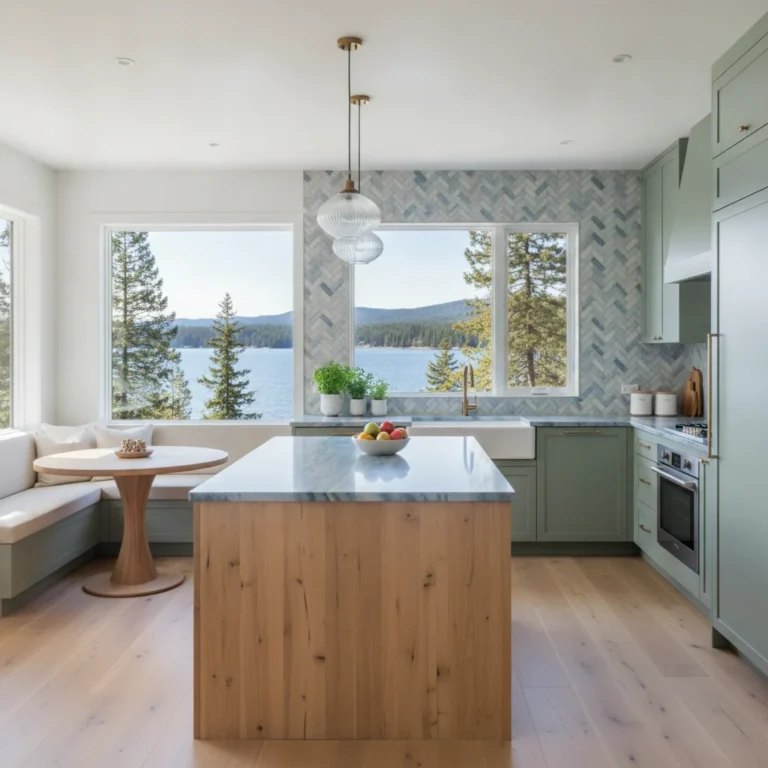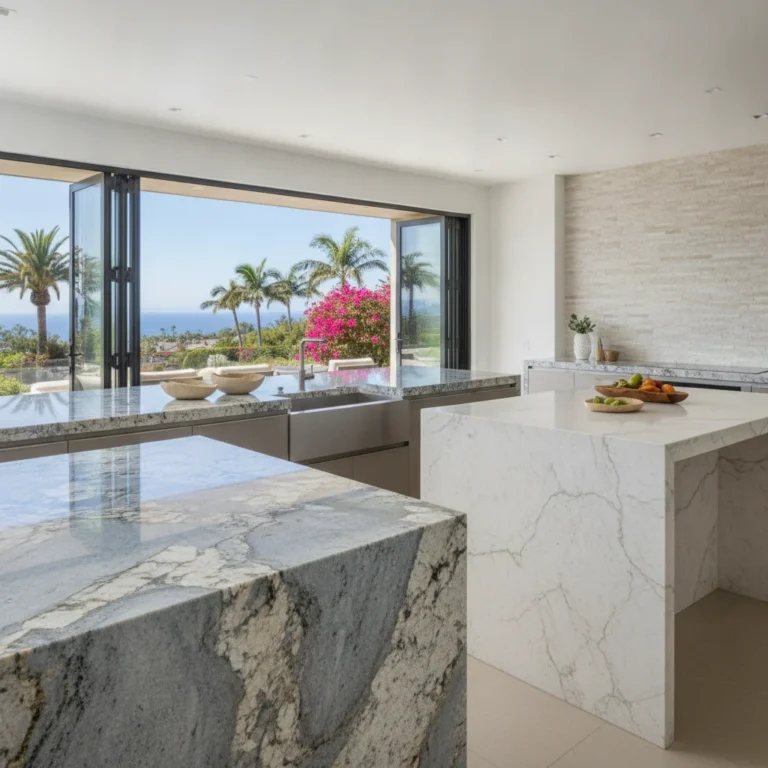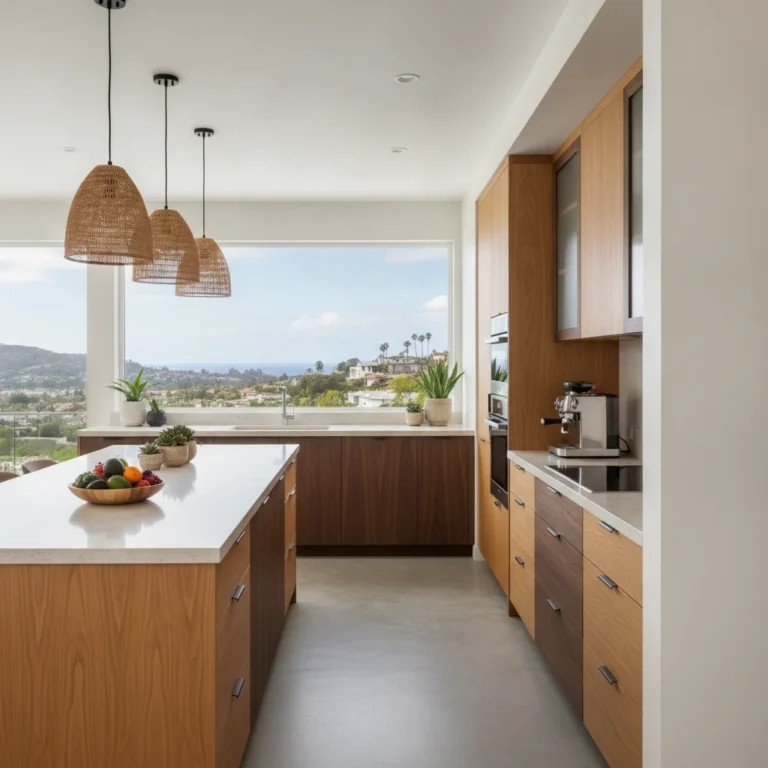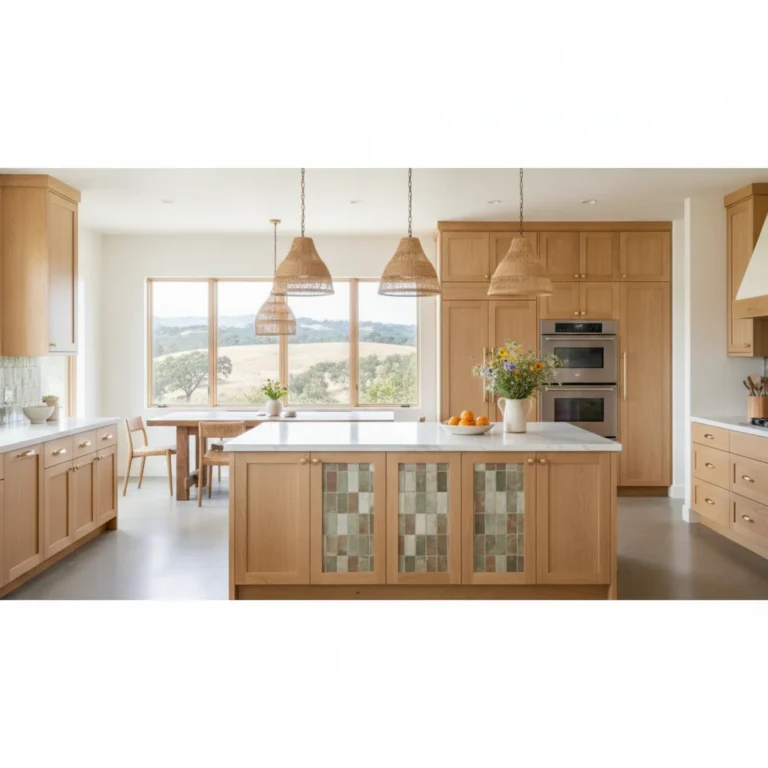
You need to know how much natural quartzite installation costs and how long fabrication takes before starting your coastal renovation project. In coastal North County, typical quartzite kitchen countertop projects require a turnaround time of seven to twelve business days from laser templating to final mechanical mounting, with material pricing influenced directly by slab density and mineral rarity. You gain maximum value and long-term durability by choosing the right crystalline natural stone that withstands daily sun exposure, marine humidity, and everyday meal preparation.
Core Structural Properties Driving Quartzite Demand
Natural quartzite forms when pure quartz sandstone undergoes extreme tectonic heat and subterranean pressure. This metamorphic recrystallization fuses loose mineral grains into a dense interlocking matrix of quartz crystals. Unlike synthetic engineered surfaces, natural quartzite provides total UV stability, which prevents color fading and resin scorching inside bright coastal properties with expansive glass walls.
- Mohs Mineral Hardness: Natural quartzite rates 7 on the Mohs scale, resisting steel blade scratches effectively.
- Chemical Inertness: True quartzite contains pure silica that will not etch when exposed to lemon juice or vinegar.
- Porosity Variations: Density ranges between 0.1% and 0.8% water absorption by weight depending on formation pressure.
- Thermal Threshold: Withstands temperatures exceeding 1000 degrees Fahrenheit without surface delamination or discoloration.
Understanding these core geological factors helps you select authentic natural stone over softer lookalikes like dolomitic marble. Fabricators inspect slabs for structural fissures and natural crystalline cross-bedding before processing cuts, ensuring your kitchen island retains total structural integrity through decades of intensive use.
Dominant Quartzite Color Trends in Solana Beach for 2026
Coastal architectural styling is moving away from uniform cool grays toward organic, layered palettes that reflect natural coastal geography. Homeowners across Solana Beach and nearby Carlsbad select stone slabs featuring warm sand backgrounds, subtle moss veining, and translucent sea-salt fields that harmonize with natural white oak and custom millwork.
Warm Neutral Slabs with Dynamic Micro-Veining
Taj Mahal and Perla Venata continue to dominate coastal living spaces because their creamy amber tones ground open-concept floor plans. These stones incorporate micro-crystalline structures that softly reflect morning sunlight without harsh glare. Designers pair these warm slabs with brushed bronze plumbing fixtures and rift-sawn cabinets to create balanced, textural depth.
Vibrant Oceanic Greens and Marine Blues
Botanical green and deep sea quartzites such as Sea Pearl, Emerald Green, and Macaubas Blue serve as functional art in modern kitchen spaces. These dramatic slabs contain mineral traces of chlorite and kyanite that create undulating wave patterns across large kitchen islands. When paired with high quality millwork like the styles featured in our guide to kitchen cabinets trends in Carlsbad, dynamic marine slabs anchor the overall kitchen architecture.
Selecting these striking colors requires careful coordination with your existing flooring and ceiling lighting temperatures to ensure the mineral undertones remain vibrant day and night.
Slab Finish Innovations: Leathered, Honed, and Suede Textures
Polished finishes are no longer the exclusive choice for luxury kitchen remodels. Textured natural finishes now account for a major portion of residential installations throughout Southern California, providing distinct visual and tactile advantages.
| Surface Finish | Tactile Texture | Light Reflection Level | Maintenance Priority |
|---|---|---|---|
| Polished | Ultra-smooth, glass-like | High (90-95 gloss units) | Wipe fingerprints and water spots |
| Honed | Smooth, matte satin | Low (15-25 gloss units) | Impregnating sealers for oil resistance |
| Leathered | Textured, pebble relief | Very Low (5-10 gloss units) | Periodic micro-bristle dry cleaning |
| Suede | Silky velvet, micro-relief | Low (10-20 gloss units) | Immediate wipe down of acidic liquids |
A leathered surface is created through diamond-tipped brush passes that remove softer mineral pockets while retaining hard quartz ridges. This texture conceals water spots from coastal air, hides everyday fingerprints, and softens overhead architectural lighting. Honed surfaces deliver an understated, modern European look that fits minimalist design schemes across open coastal layouts.
Coastal Environmental Factors and Quartzite Longevity
Living within half a mile of the ocean exposes interior surfaces to distinct atmospheric challenges that inland areas rarely experience. Airborne marine salts, elevated relative humidity, and intense ultraviolet radiation through floor-to-ceiling panoramic windows degrade lesser synthetic materials over time.
- Salt Aerosol Exposure: Dissolved chlorides deposit on countertop surfaces, requiring non-porous barriers to prevent mineral crystallization within microscopic stone pores.
- Solar Heat Concentration: Large modern skylights and patio sliders create thermal hotspots that cause resin-based engineered counters to warp or yellow.
- Humidity Shifts: Marine layer cycling demands robust silicone bonding agents and stone sealants that flex without losing adhesion to substrate framing.
- Sand Particle Abrasion: Fine coastal grit tracked inside scratches softer calcitic stones, while quartzite surfaces resist surface dulling from micro-abrasions.
Natural quartzite handles these demanding coastal parameters effortlessly because pure quartz minerals do not oxidize, fade, or soften when exposed to ocean air and high solar radiation.
Architectural Edge Profiles and Island Joinery Trends
Edge profiling transforms raw stone slabs into architectural centerpieces. For 2026, Solana Beach homeowners are moving away from traditional ogee edges in favor of clean, structural joinery that emphasizes slab thickness and seamless mineral flow across multi-plane surfaces.
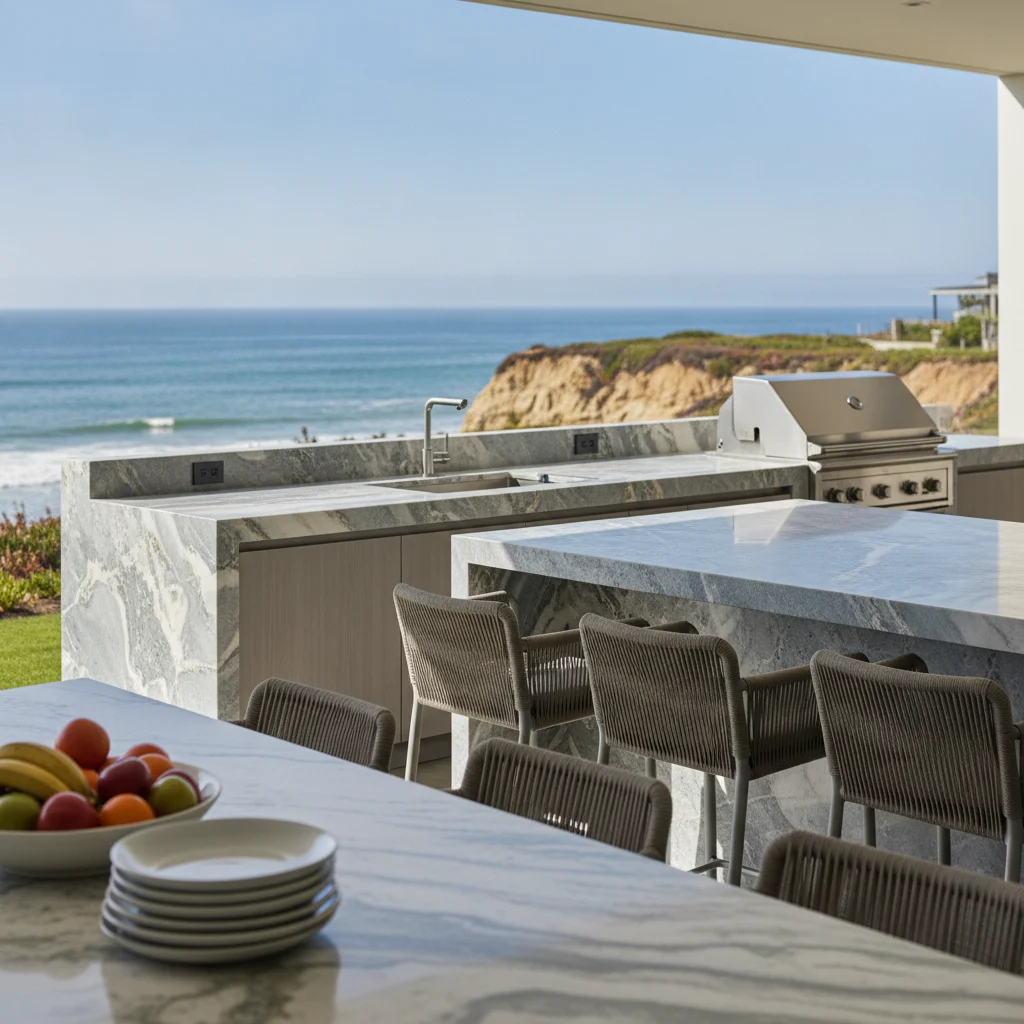
Mitered waterfall drops remain a top design requirement, creating a continuous vertical cascade of natural veining from the countertop plane directly down to the floor. Modern fabricators execute these 45-degree miter joints using computer numerical control bridge saws to align complex mineral striations across the corner seam. Fluted and reeded edge details fabricated on computer-guided machinery also provide distinct tactile focal points along kitchen perimeter spans.
For homeowners planning comprehensive interior updates, pairing customized quartzite edge details with broader design concepts outlined in our breakdown of kitchen remodeling trends in San Diego ensures cohesive visual lines from the cooking zone to adjoining entertainment spaces.
Structural Engineering and Substrate Support Standards
Natural quartzite weighs roughly 18 to 20 pounds per square foot in standard three-centimeter thickness. Heavy overhangs for island bar seating and massive spans over undercounter refrigeration units require robust structural engineering to prevent deflection and stone cracking.
Industry guidelines from the Natural Stone Institute mandate that any unsupported countertop overhang exceeding 10 inches requires hidden structural steel supports. Fabricators route concealed channels into the cabinet sub-tops to embed solid cold-rolled steel bracket plates that eliminate the need for clumsy vertical corbels that impede knee room. Proper leveling of base cabinetry represents another critical phase, as a minor floor slope common in older beach bungalows can introduce shear stresses across rigid stone spans if uncorrected before adhesive placement.
Precision laser templating captures every wall variance, electrical cut-out, and plumbing pathway directly to ensure precise fitment against finished tile backsplashes and custom cabinet framework.
Comprehensive Care and Penetrating Sealer Protocols
While natural quartzite provides exceptional resistance to heat and physical scratching, its crystalline nature requires proper initial sealing and periodic surface care to block organic stains from wine, coffee, and cooking oils.
A rigorous maintenance protocol keeps quartzite pristine:
- Fluoro-Chemical Impregnating Sealers: Apply high-grade penetrating fluoropolymer sealers upon installation to occupy microscopic void spaces between quartz crystals without altering surface sheen.
- PH-Neutral Surface Cleaners: Use dedicated stone cleaners or mild liquid dish detergents for daily maintenance rather than abrasive scouring powders or bleach-based sprays.
- The Water Drop Density Test: Test sealant performance annually by placing a quarter-sized pool of tap water on the surface; if the stone darkens after five minutes, reapply sealer.
- Immediate Spill Mitigation: Wipe high-tannin liquids such as red wine or turmeric oils promptly to avoid prolonged capillary absorption into natural stone seams.
Adhering to these preventive care standards ensures your natural stone counters remain as radiant as the day technicians completed final placement.
Consult Prefab Granite Depot for Your Solana Beach Project
Upgrade your coastal living space with premium natural quartzite surfaces fabricated to exact architectural standards. Prefab Granite Depot provides complete end-to-end design assistance, digital laser templating, precision waterjet fabrication, and professional installation tailored to coastal lifestyle requirements. Call our team today at 858-330-6782 to schedule your design consultation and receive an accurate project estimate.
Frequently Asked Questions
What makes quartzite better than quartz for coastal homes?
Natural quartzite contains pure silica minerals that remain completely unaffected by intense ultraviolet sunlight and oceanic heat. Engineered quartz uses synthetic polymer resins that can discolor, warp, or fade when exposed to direct sun through coastal windows. Quartzite also provides superior scratch and thermal resistance compared to manufactured surfaces.
How often do you need to seal quartzite countertops?
Most dense quartzite slabs require professional penetrating sealer application once every one to two years depending on surface porosity and daily usage. You can perform a simple water droplet test to verify if the surface requires a fresh coat of sealer. Slabs with lighter background tones often benefit from annual resealing.
Can quartzite crack or chip around the sink edges?
Quartzite rates exceptionally high on the Mohs mineral hardness scale, making chips rare during normal daily kitchen activities. Installing a slight radius or eased edge profile along under-mount sink cutouts further minimizes the risk of impact damage from heavy cast iron cookware. Professional fabricators reinforce these critical areas to guarantee long-term stability.
How does quartzite pricing compare to premium granite and marble?
Quartzite typically carries a higher initial investment than standard granite due to the extreme hardness of the stone, which increases diamond blade wear and fabrication time. However, it delivers comparable luxury veining to delicate marble without the constant vulnerability to acid etching and scratching. Its longevity and low long-term repair costs offset the initial material price difference.
Does hot cookware damage natural quartzite counters directly?
True natural quartzite tolerates high heat exceeding 1000 degrees Fahrenheit without scorching or burning. Setting hot pans straight from the stovetop onto the stone will not damage the mineral structure. We still suggest using trivets to prevent thermal shock from extreme, localized temperature transfers.
How long does the quartzite installation process take from template to finish?
Fabrication and installation typically require seven to twelve business days after technicians complete digital laser templating of your installed cabinets. The on-site installation of the counters and waterfall miter joints generally takes a single working day for standard kitchen configurations. Complex multi-room layouts may require two days for final mechanical alignment.