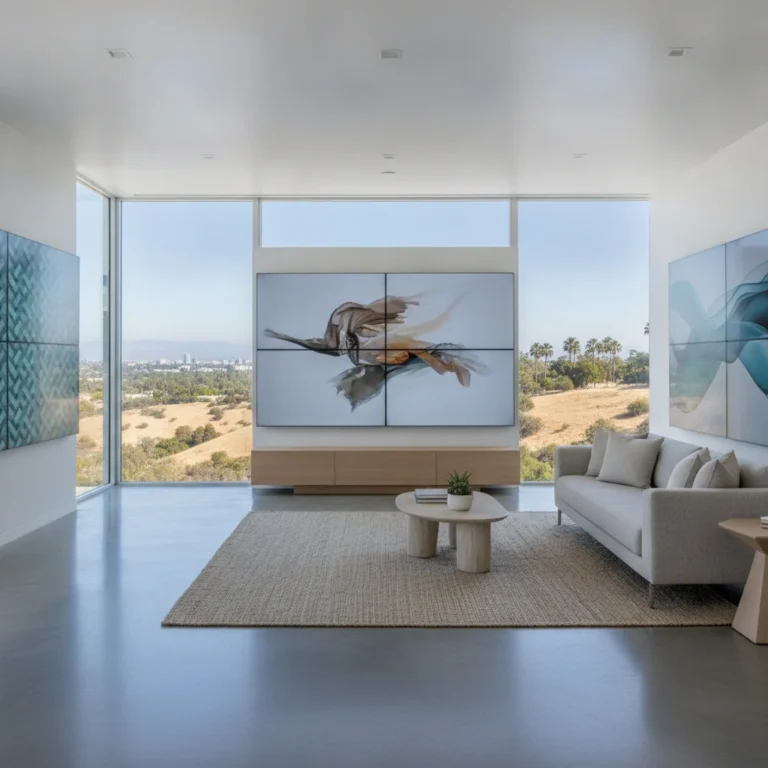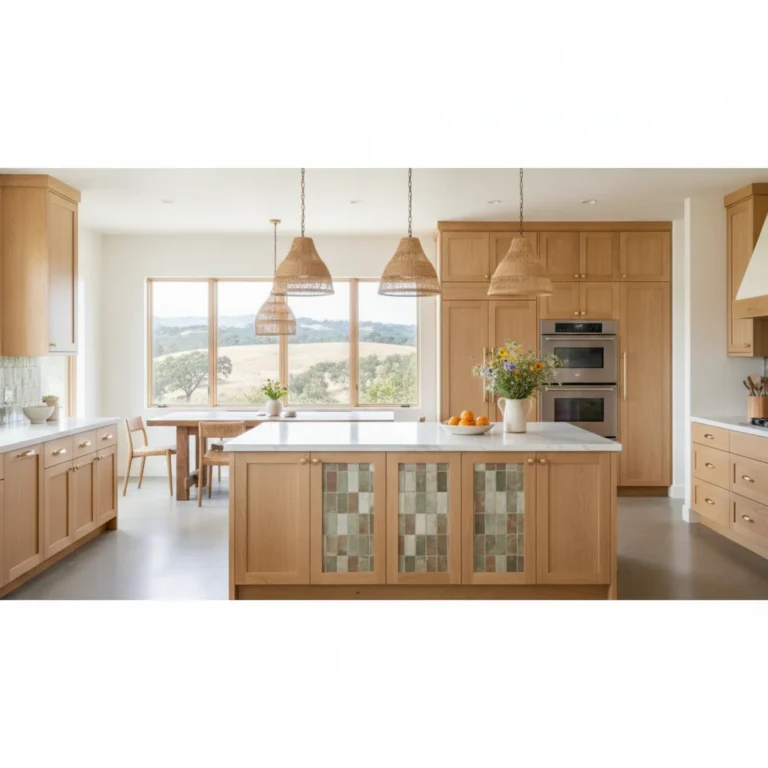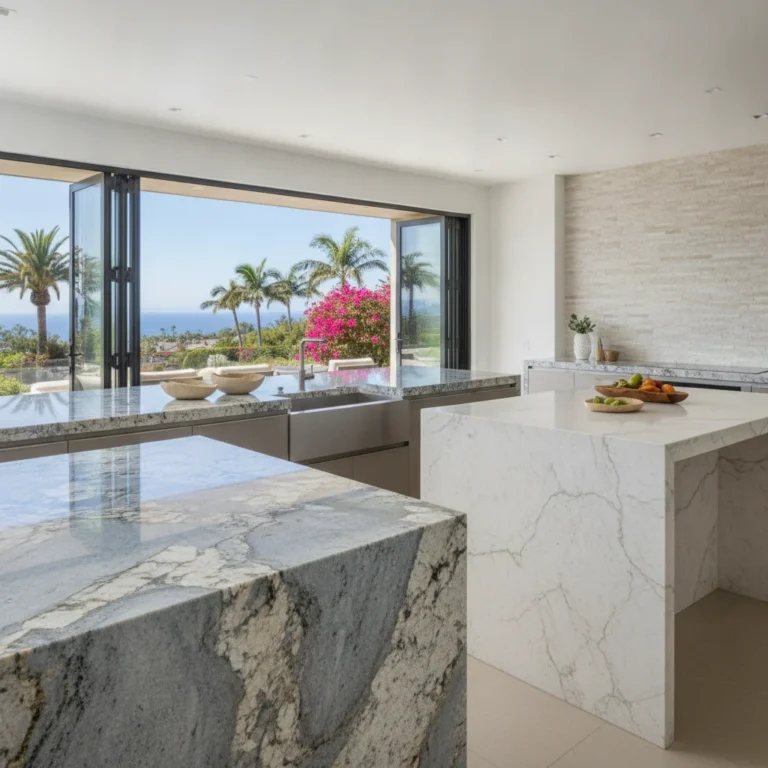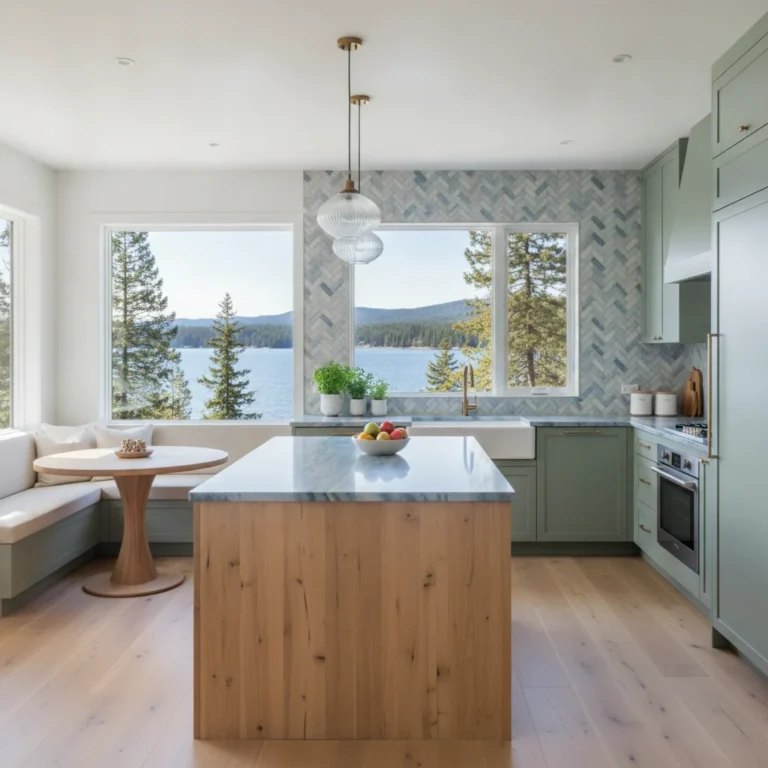
Living along the coast in Imperial Beach exposes your home interiors to persistent marine air, saltwater moisture, and high humidity levels. Selecting building materials here demands a practical balance between extreme durability and elevated coastal aesthetics. Modern prefabricated surfaces deliver precisely that balance by giving you factory-milled precision, dense structural integrity, and rapid installation timelines that standard custom fabrication cannot match.
Core Factors Driving Prefabricated Surface Adoption in 2026
Homeowners choose modern manufactured stone slabs because precision engineering solves long-standing coastal maintenance hurdles while slashing project turnaround schedules. When you remodel a beachside kitchen or bathroom, you require dense, non-porous surfaces that resist saltwater corrosion and seasonal shifting.
- Factory bullnose and mitered edges eliminate expensive on-site stone cutting labor.
- Standardized slab sizing accelerates delivery timelines to days instead of months.
- Non-porous quartz and dense granite profiles resist marine atmospheric moisture.
- Pre-cut countertop depths align seamlessly with standard coastal cabinetry layouts.
These core specifications allow property owners to secure premium stone surfaces at significantly lower overhead costs compared to raw slab fabrication. You bypass weeks of manual masonry labor while securing tighter tolerances across every edge profile.
High-Performance Quartz Dominates Marine Environments
Engineered quartz continues to lead coastal residential renovations into 2026. The continuous marine layer in South Bay creates localized humidity swings that can penetrate porous natural stones if you do not seal them continuously. Engineered quartz combines roughly ninety percent crushed natural stone with specialized polymer resins, creating an impenetrable barrier against environmental moisture and airborne salts.
According to the 2025 Design Trends Report published by the National Kitchen and Bath Association (NKBA), over seventy-eight percent of residential designers specify engineered quartz for moisture-heavy environments due to its exceptional structural stability. In Imperial Beach, this material choice prevents long-term moisture discoloration around undermount sinks and eliminate annual chemical sealing routines.
Warm Neutral Veining and Textured Coastal Finishes
Homeowners are moving away from stark arctic whites toward warm alabaster, soft taupe, and sandy greige undertones. These gentle palettes mirror the natural sand dunes and coastal bluffs of Southern California, establishing a relaxed yet sophisticated interior atmosphere. Honed and leathered surface finishes also surpass high-gloss polished tops by diffusing bright natural sunlight and concealing everyday water spots.
Prefabricated Porcelain Slabs for Indoor-Outdoor Living
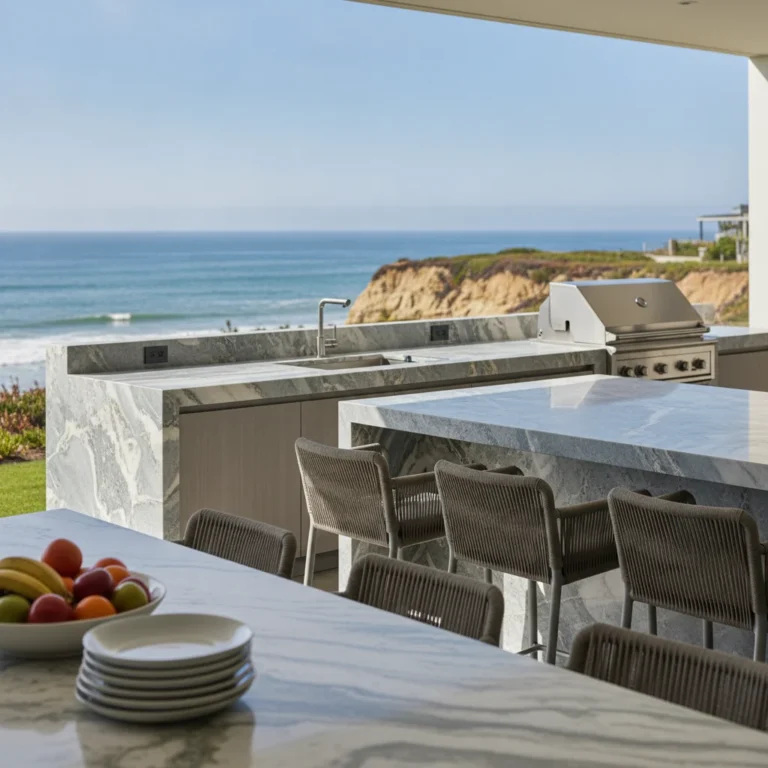
Indoor-outdoor transitions define modern architectural design across San Diego County coastal communities. Prefabricated porcelain slabs provide the ultimate solution for homeowners expanding their kitchens onto covered patios, outdoor barbecue islands, and sunrooms. Unlike traditional resin-bound surfaces, porcelain undergoes firing at temperatures exceeding two thousand degrees Fahrenheit, which makes the material completely UV-proof and thermal shock resistant.
You can run continuous porcelain countertop runs from your interior kitchen directly out to an exterior entertaining patio without worrying about direct sunlight fading the surface color. Porcelain maintains zero water absorption, making it entirely impervious to morning ocean fog and marine salt deposition. The material also resists direct pan heat, sharp kitchen knives, and intense outdoor grilling splatters without staining or scorching.
| Surface Material | Moisture Absorption Rate | UV Resistance Level | Sealing Requirement | Ideal Coastal Application |
|---|---|---|---|---|
| Prefabricated Quartz | 0.02% | Moderate (Indoor Only) | None | Indoor Kitchens and Vanities |
| Prefabricated Porcelain | 0.01% | High (Indoor/Outdoor) | None | Patio Kitchens and Sunrooms |
| Prefabricated Granite | 0.20% to 0.50% | High (Indoor/Outdoor) | Annual Sealing | High-Traffic Indoor Kitchens |
| Natural Marble | 0.50% to 2.00% | Moderate | Bi-Annual Sealing | Low-Traffic Powder Baths |
Granite Profiles Tailored for High-Traffic Beach Properties
Dense natural granites remain an enduring favorite for active households, vacation rentals, and multifamily beach properties. Dense prefabricated granites like Steel Grey, Black Pearl, and Alaska White offer immense impact resistance that withstands heavy kitchen cookware and frequent guest traffic. Modern fabricators now prepare these natural slabs with pre-sealed protective coatings directly at the production facility.
Standard prefabricated granite blanks measure ninety-six to one hundred and eight inches in length with integrated one-and-a-half-inch laminated edge treatments. This standardized sizing fits standard residential kitchen perimeters and peninsula configurations perfectly, which substantially cuts down dust generation inside your home during the installation process.
Edge Profile Trends for 2026
Modern coastal interiors favor clean, minimalist profiles over ornate multi-tiered edges. Eased edges and crisp pencil miter edges create a contemporary, uncluttered look that lets the natural movement of the stone take center stage. These streamlined edge geometries also resist chipping from heavy dishware much better than delicate ogee or dupont cuts.
Localized Logistics and Structural Renovation Considerations
Executing a countertop remodel near the ocean requires distinct planning compared to inland installations across San Marcos or Borrego Springs. Coastal humidity changes how setting compounds cure, requiring specialized fast-setting epoxy resins during seam assembly. Furthermore, older beach cottages often feature irregular framing or out-of-level subfloors caused by historic coastal settlement.
- Inspect subflooring and lower cabinetry for moisture rot before setting heavy stone blanks.
- Utilize marine-grade silicone adhesives to secure undermount sinks against persistent salt air corrosion.
- Acclimatize stone slabs to indoor ambient humidity prior to completing final structural seaming.
- Ensure continuous level support across long spans to prevent stress fractures along structural joints.
Proper substrate preparation ensures your prefabricated stone surfaces rest on a flat, unyielding foundation, eliminating uneven seams and surface cracking over decades of continuous use.
Optimizing Small-Footprint Coastal Kitchen Layouts
Many classic Imperial Beach properties feature compact galley kitchens or cozy open-concept layouts that demand efficient spatial planning. Prefabricated stone formats excel in these spaces because standard slab depths align seamlessly with twenty-four-inch base cabinets while providing a generous one-and-a-half-inch overhang.
You can maximize functional counter space by pairing standardized prefabricated slabs with integrated full-height stone backsplashes. Running the same continuous stone pattern from the countertop surface straight up to the underside of the upper cabinetry creates an unbroken vertical line that makes compact kitchens feel substantially larger. This seamless design approach also eliminates grout lines entirely, giving you a hygienic kitchen wall that wipes clean effortlessly.
For additional layout options tailored to coastal homes, explore our <a href=
Frequently Asked Questions
Why should I choose prefabricated countertops over custom slabs for a coastal home?
Prefabricated countertops feature factory-finished edges and standard dimensions that reduce material costs and on-site labor substantially. They provide the same high-grade quartz and natural stone quality as raw slabs while delivering faster installation timelines. This efficiency makes them ideal for fast kitchen upgrades in beachside properties.
How does marine air impact natural stone surfaces in Imperial Beach?
Salt-laden coastal air can penetrate porous natural stones if you do not seal them properly, leading to surface dullness and localized moisture stains. Non-porous prefabricated quartz and ultra-dense porcelain naturally resist atmospheric salt and moisture penetration. If you select natural granite, apply a high-grade penetrating sealer annually to maintain stone integrity.
Can I install prefabricated porcelain countertops on an outdoor patio?
Yes, prefabricated porcelain slabs perform exceptionally well in outdoor kitchen environments because they resist extreme UV radiation and thermal shock. They do not fade under direct sunlight or absorb ocean moisture, unlike resin-heavy surfaces. This makes porcelain the top material choice for year-round indoor-outdoor entertaining spaces.
What edge profile works best for modern coastal interior design?
Eased edge and crisp mitered edge profiles dominate modern coastal designs because they create clean, uncluttered visual lines. These square-look edges showcase the stone veining while minimizing visual distraction in open living layouts. They also offer higher impact resistance against accidental pot and pan impacts.
How long does a standard prefabricated countertop installation take?
Because the stone cutting, polishing, and edge lamination occur at the factory, on-site installation typically finishes within a single day. Contractors need only perform minimal sink cutouts and seam adjustments on location. This rapid process cuts down household disruption compared to custom slab fabrication.
Do prefabricated countertops limit my sink and cooktop layout options?
No, standard prefabricated blanks accommodate virtually all standard undermount sinks, drop-in basins, and cooktops. Professional installers cut the exact appliance openings on-site to match your cabinetry specifications precisely. You gain custom fitting accuracy alongside factory edge quality.