Understanding the Step-by-Step Quartzite Installation Process
You transform your kitchen or bathroom through a precise, methodical fabrication sequence when you choose genuine quartzite slabs. The journey begins when you visit the stone yard to hand-select individual raw slabs, inspecting the unique crystalline veins, natural fissures, and color variations under realistic lighting conditions. Once you select your material, technicians arrive at your home to capture digital laser templates of your existing base cabinetry. These digital measurements account for wall deviations, corner squareness, overhang dimensions, and custom appliance cutouts with millimeter-level accuracy.
Next, computer-aided design software translates those spatial coordinates into a precise cut plan that maximizes continuous vein flow across adjacent slabs, particularly along seams and waterfall edges. High-precision waterjets and automated bridge saws slice the dense sandstone metamorphic rock without creating micro-fractures. Skilled stone artisans then mill, shape, and polish your selected edge profiles using diamond-grit polishing pads before applying an initial penetrating sealer. Finally, the installation crew secures the finished countertops onto level cabinet boxes, joins the seams with color-matched epoxy resins, and executes the final perimeter seals.
Core Characteristics and Material Fundamentals
Homeowners in El Cajon choose natural quartzite because it combines the opulent visual movement of white marble with superior mineral hardness. When geological heat and pressure fuse quartz-rich sandstone beneath the crust of the earth, the individual mineral grains recrystallize into an interlocking matrix of pure quartz crystals. For complete comparisons between material properties, review our detailed guide on granite vs. quartzite to determine the best surface structure for your culinary space.
- Mohs hardness rating of seven outperforms both granite and engineered quartz formulations
- Extreme thermal stability prevents scorch marks from hot cookware and baking sheets
- Non-reactive silica base resists etching from acidic citrus juices, vinegar, and household cleaners
- Distinct geological veining ensures that every single fabricated slab remains one of a kind
Understanding these mineral fundamentals allows you to make informed decisions regarding edge profiles, cut locations, and daily kitchen usage. Because genuine quartzite contains dense quartz minerals rather than softer calcite, it maintains its structural integrity through decades of rigorous food preparation and heavy entertaining.
Emerging Color Palettes and Surface Finishes for 2026
Warm Earth Tones and Crystalline Whites
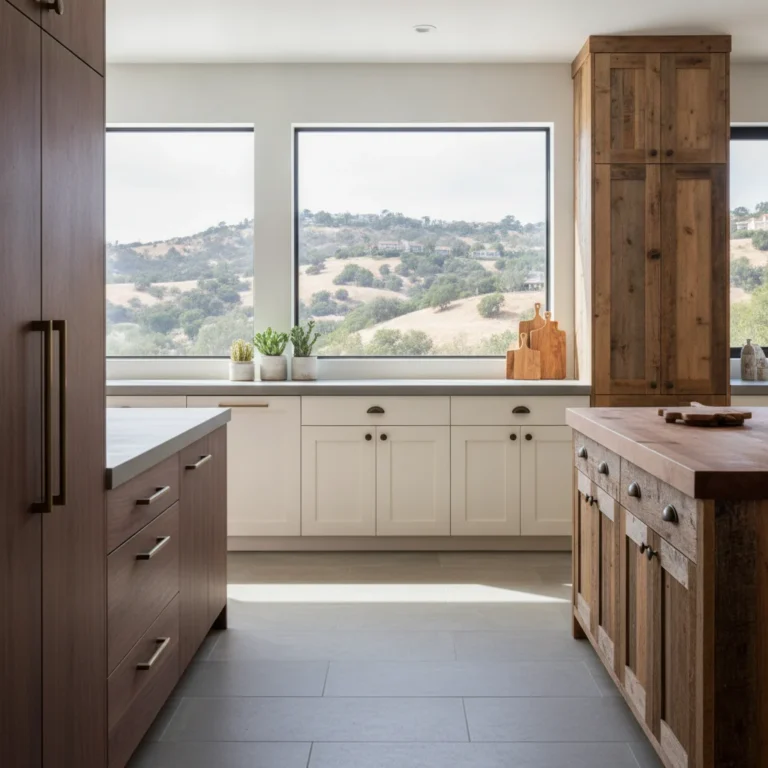
Design preferences across Southern California are shifting away from stark monochromatic grey surfaces toward warm, grounding palettes. Varieties like Taj Mahal, Perla Venata, and Cristallo dominate modern remodels, presenting warm cream backgrounds laced with gold, taupe, and bronze crystalline veining. These warm varieties complement natural wood cabinetry, rift-sawn white oak, and brushed brass fixtures, creating inviting spaces that maximize natural daylight.
Dramatic Botanical Greens and Coastal Blues
Bold focal points define current luxury interior concepts. Deep forest greens, seafoam deposits, and dramatic azure bands found in exotic Brazilian slabs like Emerald Green, Botanic Wave, and Sea Pearl draw inspiration from the diverse topography of San Diego County. Pairing these striking slabs with neutral perimeter surfaces lets the natural stone serve as an architectural centerpiece.
Honed and Leathered Tactile Textures
While polished high-gloss finishes remain popular, tactile surface treatments are surging in popularity for 2026. Leathering stone involves diamond-tipped brushes that gently texture the softer sedimentary zones while leaving the hardest quartz crystals raised. This creates a soft, matte patina that conceals everyday fingerprints, water marks, and minor surface smudges while providing a rich organic feel to the touch.
Technical Comparison and Performance Data
Rigorous laboratory testing demonstrates why natural quartzite remains the premier choice for demanding interior applications. According to technical testing data published by the Natural Stone Institute (NSI) and standardized ASTM material evaluation standards, natural quartzite exhibits exceptional compressive strength and abrasion resistance compared to alternative slab surfaces.
| Material Type | Mohs Hardness | Porosity Level (%) | Heat Resistance | Acid Etch Resistance |
|---|---|---|---|---|
| Natural Quartzite | 7.0 to 8.0 | 0.1 to 0.5 | Up to 1,000°F | High (Silica Base) |
| Granite | 6.0 to 7.0 | 0.2 to 0.8 | Up to 480°F | High (Silica Base) |
| Engineered Quartz | 6.0 to 7.0 | 0.01 to 0.05 | Up to 300°F | High (Polymer Bound) |
| Marble | 3.0 to 4.0 | 0.5 to 2.0 | Up to 350°F | Low (Calcite Base) |
As the data illustrates, the quartz density provides unmatched resilience against heavy daily impact and thermal loads. Engineered quartz surfaces rely on synthetic resin polymers that degrade or discolor when exposed to high heat or direct sunlight, making natural quartzite the far superior option for spaces that demand durability.
East County Climate Demands and Structural Resilience
El Cajon experiences significant microclimate conditions, including dry seasonal heat waves, intense UV radiation, and broad daily temperature swings between day and night. Homeowners from nearby communities like Alpine and Vista face similar conditions where summer temperatures frequently exceed triple digits. When building indoor-outdoor entertaining spaces or installing expansive windows that bathe your kitchen in direct sunlight, standard engineered quartz countertops often suffer resin breakdown and yellowing.
- Apply a premium fluoropolymer impregnating sealer every twelve to eighteen months to block moisture penetration
- Clean exterior prep areas regularly with pH-neutral stone detergents rather than abrasive chemical degreasers
- Install rigid sub-top plywood supports to distribute slab mass evenly across custom outdoor kitchen cabinetry
- Shield exterior counter perimeters from prolonged pooling water during occasional heavy winter rain cycles
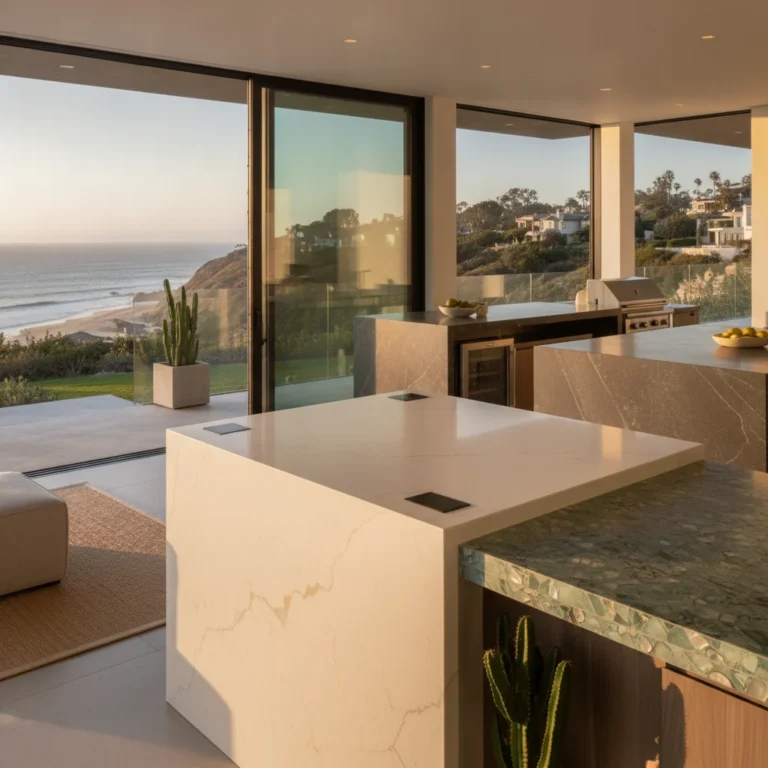
Natural quartzite handles the intense solar radiation of East County with complete stability. The mineral structure never discolors under continuous UV light exposure, allowing you to run seamless surface transitions from indoor islands directly out to covered outdoor patio kitchens.
Custom Edge Profiles and Architectural Applications
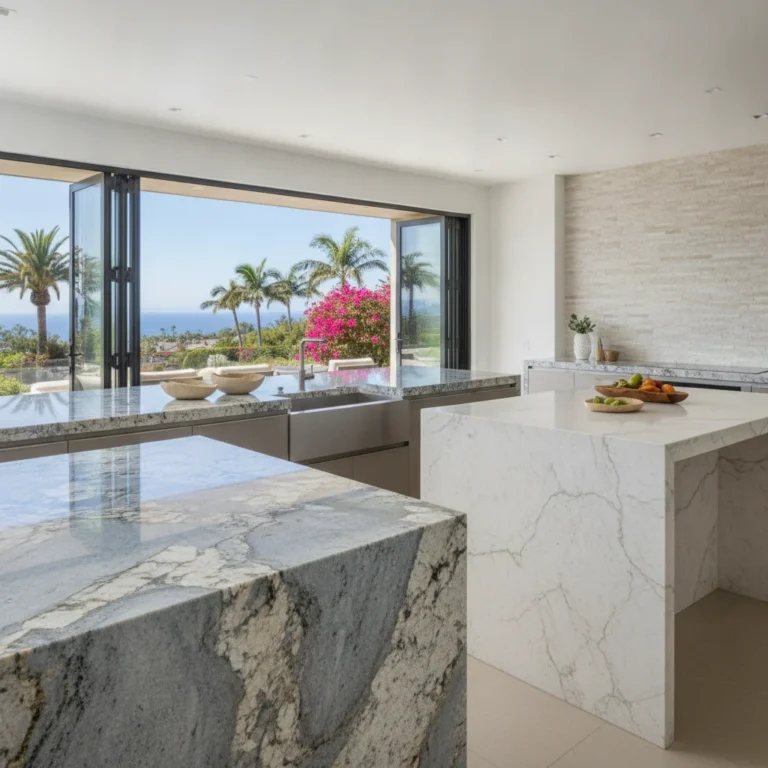
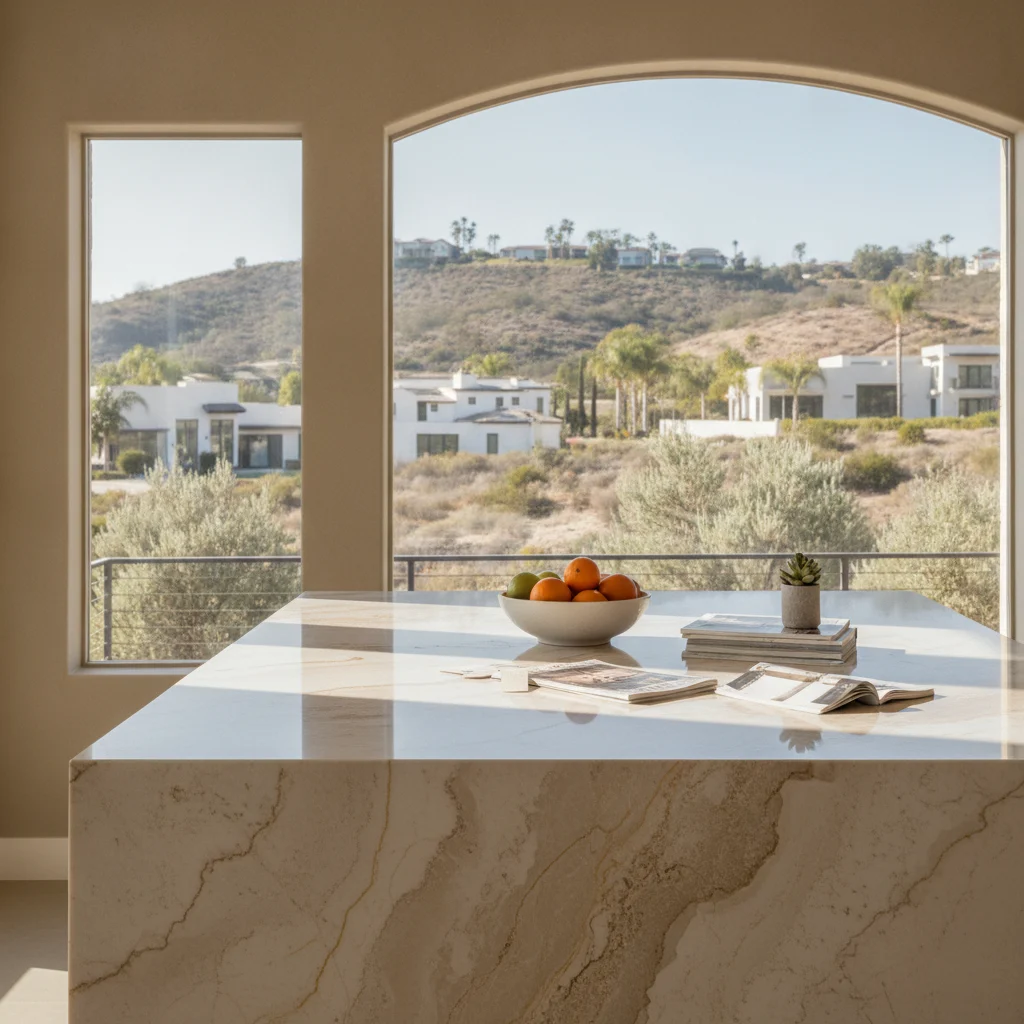
Modern stone fabrication in El Cajon emphasizes architectural continuity and sculptural presence. Waterfall islands, where the quartzite surface flows vertically down cabinet ends to the finished floor, remain the leading configuration for luxury kitchen layouts. Mitered apron edges create the visual illusion of a massive four-inch-thick solid stone block while keeping overall slab weight manageable for standard floor joists and custom cabinets.
For elevated personal sanctuaries, consider pairing your slab surfaces with expert bathroom remodeling in El Cajon to install matching floating vanities, floor-to-ceiling shower wall cladding, and custom solid stone shower thresholds. Using full-height quartzite slabs behind ranges and along master vanity walls eliminates grout lines entirely, delivering clean visual lines alongside effortless cleaning routine maintenance.
Maintenance Protocols and Long-Term Surface Preservation
Preserving the pristine finish of your quartzite surfaces requires minimal yet consistent care. While the quartz minerals resist scratching from kitchen knives and heavy cooking vessels, microscopic capillary pores can absorb colored liquids such as red wine, coffee, or cooking oils if you leave the surface unsealed. A simple water droplet test indicates when your counters need attention: if water beads on the surface, your seal remains intact; if water darkens the stone within ten minutes, apply a fresh coat of sealer.
Daily maintenance involves wiping down your countertops with warm water, mild dish soap, and a soft microfiber towel. Avoid aggressive scouring powders, ammoniated window cleaners, or concentrated bleach solutions that break down protective sealant coatings over time. Addressing spills promptly preserves the natural radiance of your stone investment for generations without requiring costly refinishing services.
Start Your Custom Slab Project with Prefab Granite Depot
You deserve an elevated home that showcases the finest natural stone fabrication and flawless professional installation. Explore our vast selection of premium quartzite countertops to discover the perfect slab for your interior design aesthetic. Call Prefab Granite Depot today at 858-330-6782 to schedule your design consultation and receive your detailed, obligation-free estimate.
Frequently Asked Questions
How does quartzite differ from engineered quartz?
Natural quartzite is a 100% natural metamorphic rock quarried directly from the earth and cut into solid slabs. Engineered quartz is a man-made composite consisting of crushed quartz minerals combined with synthetic polymer resins and color pigments. Natural quartzite offers significantly higher heat and UV resistance than resin-based engineered quartz.
Does natural quartzite require regular sealing?
Yes, natural quartzite contains microscopic porous channels that benefit from periodic application of a penetrating stone sealer. Most households apply a liquid impregnator once every twelve to twenty-four months based on use. This simple process protects the stone against deep oil and pigment stains.
Can you cut food directly on quartzite countertops?
While quartzite rates at seven on the Mohs hardness scale and resists scratches from steel knives, direct cutting can dull your kitchen blades quickly. Direct impact from heavy cleavers can also chip narrow countertop edges. You should always use a standard cutting board to protect both your knives and the stone finish.
Is quartzite suitable for outdoor barbecue islands in El Cajon?
Natural quartzite is an outstanding choice for outdoor kitchens because it contains no artificial resins that yellow or warp under intense solar heat and UV radiation. The stone withstands seasonal temperature shifts in East County without cracking or fading. Regular sealing prevents airborne dirt and barbecue grease from penetrating the outdoor surface.
Why is quartzite more expensive to fabricate than standard granite?
The extreme mineral hardness of crystalline quartz wears down cutting blades, waterjet components, and shaping tools much faster than softer stones. Skilled fabricators must run machinery at slower feed rates to ensure clean cuts without chipping. This increased tooling wear and intensive labor time factor into overall fabrication costs.
How do you test if a slab is authentic quartzite rather than marble?
You can verify authenticity by conducting a scratch test and an acid test on a sample remnant piece. Real quartzite easily scratches glass and does not scratch with a standard steel knife blade. Authentic quartzite also does not bubble or etch when exposed to acidic lemon juice or vinegar.